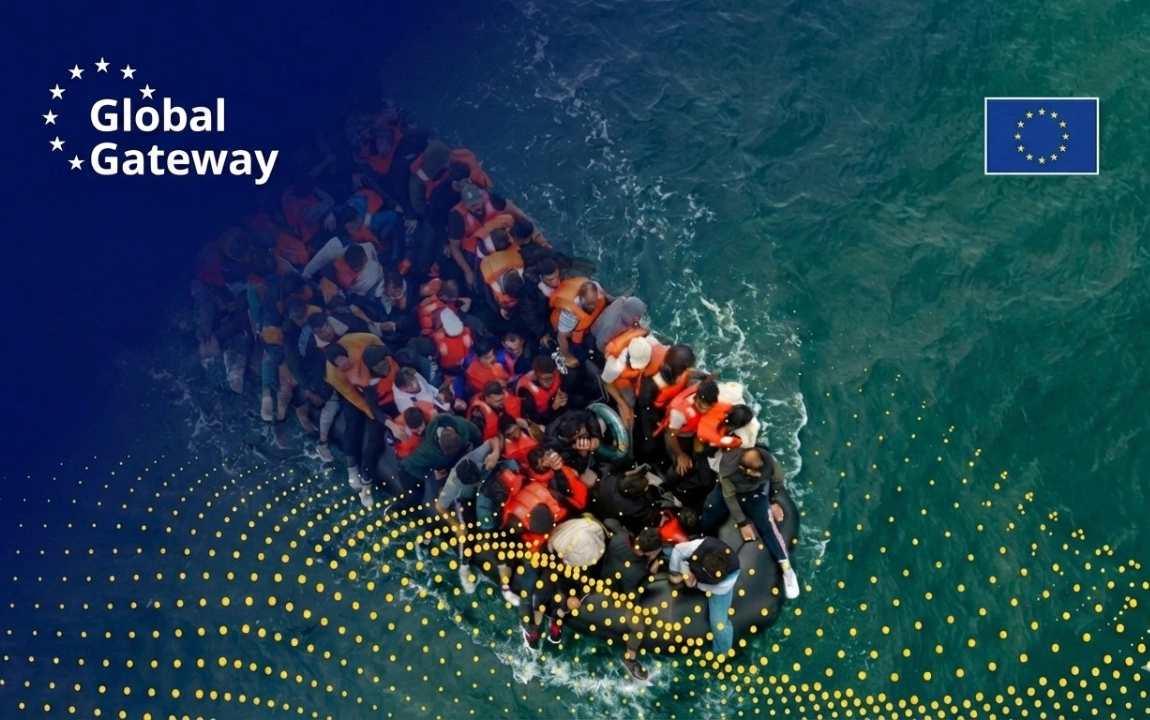
As 2026 approaches, irregular migration from the Horn of Africa remains a persistent feature of regional mobility, shaped by deep-rooted structural conditions rather than short-term crises. Countries such as Somalia, Ethiopia, Eritrea, and Sudan continue to experience high levels of youth migration driven by economic precarity, rapid demographic growth, weak labour markets, and limited access to formal livelihoods. Regional evidence shows that migration has become an embedded household strategy for managing risk and pursuing opportunity (World Bank). This is particularly true for young Somalis, who often view migration as a means to better their circumstances and achieve aspirations not readily available in their home regions. The IGAD Population and Migration Report 2025 highlights sustained youth mobility across the region, with irregular migration increasingly linked to long-term development deficits rather than episodic conflict alone (IGAD, 2025).
Policy responses to irregular migration have, however, remained largely border-centric, securitised, and reactive, focusing on containment rather than causation. Externalised border controls, transit-country enforcement, and deterrence-based cooperation have shown limited effectiveness in reducing overall migration pressures, Research demonstrates that such approaches often displace routes, increase reliance on smuggling networks, and expose migrants to greater risks, without fundamentally altering the incentives that drive mobility (CHATHAM HOUSE), In the Horn of Africa, where migration decisions are shaped by structural economic exclusion and informality, enforcement-led responses fail to offer credible alternatives to movement.
under these conditions The EU’s Global Gateway strategy, reflects an explicit shift toward a development-led approach. With commitments of up to €300 billion globally by 2027 , the strategy prioritises investment in infrastructure and connectivity, private sector growth, skills development, and institutional resilience. In the Somalia—where demographic pressure and fragile labour markets intersect—Global Gateway initiatives are framed as a means of addressing the root causes of irregular migration while strengthening partner-state stability.
This brief analyses whether that ambition can be realised. Focusing on Somalia as a key test case, it explores whether development-led investments under the Global Gateway can effectively reduce and mitigate irregular migration pressures affecting both the Somalia and Europe.
The EU Global Gateway is the European Union’s flagship external investment strategy aimed at strengthening economic resilience, sustainable connectivity, and institutional capacity in partner countries. Launched in 2021, the strategy seeks to mobilise major public and private investment across digital, transport, energy, education, and governance systems to support long-term development outcomes. In its global framing, the Global Gateway is designed to tackle structural challenges such as poverty, fragile infrastructure, weak institutions, and limited economic opportunity, while also promoting green and inclusive growth in line with the UN Sustainable Development Goals.
In Somalia, the Global Gateway serves as a core framework for EU engagement with the Federal Government on economic recovery and state-building. It is closely aligned with the broader EU–Somalia Partnership, under which the EU has allocated hundreds of millions of euros to development and governance support aimed at strengthening the Somali economy, expanding access to basic services, and fostering a more conducive environment for investment and private-sector growth. Through this multi-annual cooperation, the Global Gateway strategy is embedded within the Joint Operational Roadmap agreed between the EU and Somalia, with a focus on areas such as infrastructure, energy, trade, vocational training, and migration governance.
Implementation in Somalia takes the form of Team Europe Initiatives (TEIs) and related programmes that bring together the EU, its Member States, implementing partners, and financial institutions to support concrete, transformational projects. One major area of focus is renewable energy and green growth: the Green Energy and Economic Development (GEED) Programme, co-financed by the EU and partner governments, directs tens of millions of euros towards expanding access to clean energy and promoting new economic opportunities in the green economy. Alongside this, the RE-INTEG programme, financed through the Emergency Trust Fund for Africa, supports sustainable reintegration of refugees, returnees, and displaced populations by improving livelihoods and community resilience in areas of return — a direct contribution to migration management and social stability.
Supporting economic opportunity also includes private sector development and financial inclusion initiatives, such as EU-backed access to finance projects that strengthen micro, small and medium-sized enterprises and improve the investment climate for Somali entrepreneurs and youth (European External Action Service). Complementary investments under the Global Gateway framework aim to improve infrastructure connectivity particularly in energy, transport, and digital networks alongside regulatory and institutional reforms intended to support broader economic integration. In the Somali context, these interventions are explicitly framed as responses to long-standing development constraints: weak labour absorption, limited access to finance, fragile public institutions, and a predominance of informal economic activity. Rather than treating migration as a security problem to be contained, the Global Gateway positions underdevelopment itself as the core challenge to be addressed. By targeting job creation, skills formation, and private-sector expansion, the strategy reflects the EU’s attempt to confront the structural conditions that make irregular migration a rational choice for many young Somalis, rather than an exceptional or crisis-driven outcome.
This framing raises a critical question: to what extent can development-led investments realistically alter youth migration decisions in Somalia? Somali youth migration is rarely driven by a single factor; instead, it emerges from the interaction of economic exclusion, weak governance, insecurity, and limited pathways to social mobility. In this context, the Global Gateway’s emphasis on employment creation, institutional capacity-building, and economic resilience represents a deliberate effort to reshape the opportunity structures that influence mobility choices. Understanding whether such interventions can translate into credible alternatives to migration requires a closer examination of why young Somalis migrate in the first place—and whether the strategy’s core pillars align with those drivers. The following section therefore examines the key drivers of youth migration in Somalia, providing the necessary foundation for assessing the Global Gateway’s potential impact.
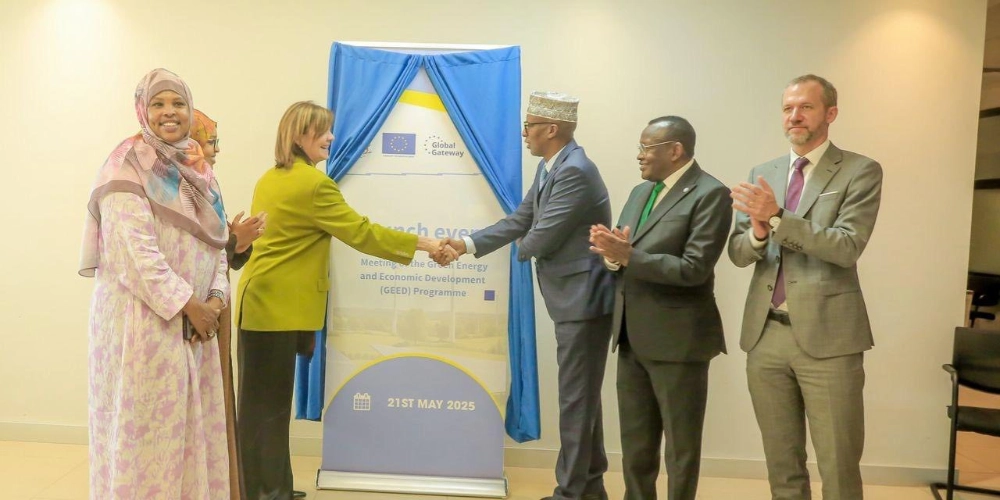
Somalia’s Minister of Environment meets with the EU Delegation to launch the GEED programme, supporting renewable energy and economic growth across the country..
Youth irregular migration in Somalia is primarily shaped by structural economic exclusion rather than short-term shocks alone. High unemployment, underemployment, and the dominance of informal and low-productivity work severely limit pathways to economic independence for young people. Despite gradual macro-economic stabilisation, labour markets remain unable to absorb a rapidly growing youth population, particularly in urban centres such as Mogadishu, Baidoa, and Kismayo (IOM). For many young Somalis, migration functions as a rational livelihood strategy in the absence of credible domestic alternatives.
Governance and institutional fragility further reinforce migration pressures. Limited state capacity, weak service delivery, and constrained implementation of development programmes reduce confidence in long-term economic prospects. While Somalia has taken steps to strengthen public institutions, gaps in vocational training, labour market regulation, and access to finance continue to restrict youth participation in formal economic activity. These constraints weaken the potential impact of development assistance and contribute to persistent perceptions that opportunity lies outside the country.
Insecurity and protracted displacement remain important contextual factors, but they increasingly interact with economic drivers rather than acting as sole triggers. For many young people, especially those born during periods of conflict, migration decisions are shaped by long-term assessments of future opportunity rather than immediate threats. Together, economic exclusion, institutional weakness, and prolonged insecurity create conditions in which irregular migration becomes a calculated response to structural constraint—providing a critical lens through which the relevance and potential effectiveness of the EU’s Global Gateway interventions in Somalia must be assessed.
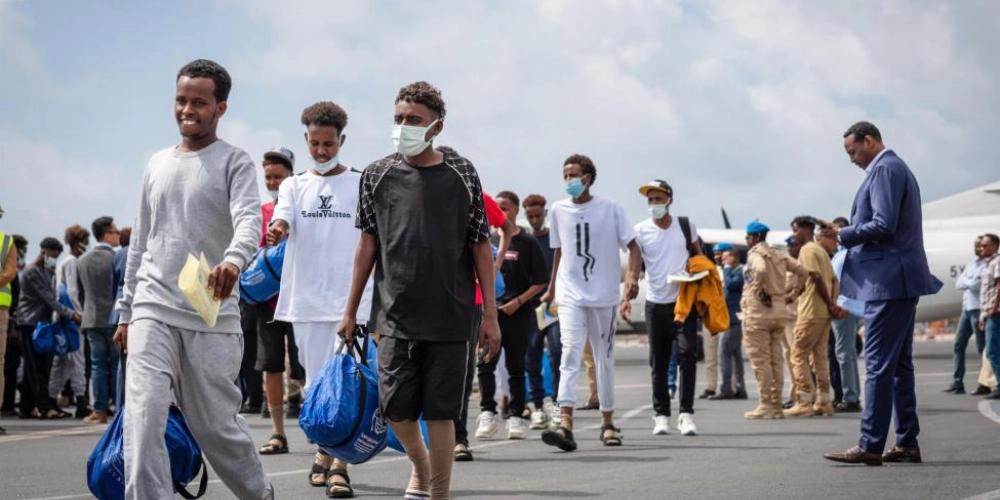
164 Somali migrants, including minors, have returned safely to Mogadishu with support from the International Organization for Migration after being stranded in conflict-affected Libya.
Although framed under the EU’s Global Gateway strategy, many of the initiatives shaping migration-relevant outcomes in Somalia are implemented through existing EU missions, Team Europe Initiatives (TEIs), and partnerships with international organisations and Somali institutions. Rather than operating as standalone projects, Global Gateway interventions are integrated into broader EU cooperation frameworks that combine development finance, technical assistance, and policy support(ecdpm). This approach allows the EU to align large-scale investment objectives with on-the-ground delivery mechanisms in fragile and conflict-affected contexts such as Somalia. Consequently, the Global Gateway functions less as a single programme and more as a strategic umbrella under which education, capacity-building, and employment-focused interventions are coordinated to address structural drivers of youth irregular migration.
Education and skills development form a central pillar of the EU’s Global Gateway engagement in Somalia, reflecting recognition that weak human capital is a core constraint on youth livelihoods and economic inclusion. Global Gateway–aligned initiatives prioritise vocational education and training, digital skills, and labour-market-relevant competencies, particularly for young people affected by displacement and conflict. Programmes such as TEI OP-VET aim to address the persistent mismatch between youth aspirations and domestic labour demand by strengthening technical and vocational education systems and improving the employability of graduates.
From a migration perspective, the relevance of education interventions lies not in reducing mobility directly, but in reshaping opportunity structures over time. Evidence from Somalia suggests that youth migration decisions are often forward-looking and aspiration-driven; young people migrate not only because they lack education, but because education does not translate into viable employment. By linking skills training more closely to emerging sectors—such as renewable energy, digital services, and infrastructure maintenance—Global Gateway initiatives have the potential to increase the perceived returns to staying. However, their impact on irregular migration will depend on scale, quality, and alignment with real labour-market absorption capacity, rather than training provision alone.
Capacity-building represents a second core intervention area through which the Global Gateway seeks to address migration-related pressures in Somalia. Weak institutional capacity has long constrained the effectiveness of development assistance, limiting project execution, service delivery, and economic governance (EEAS). Under the Global Gateway framework, EU engagement emphasises strengthening public financial management, regulatory systems, and coordination capacity at federal and sectoral levels. These efforts are intended to improve the state’s ability to plan, absorb, and sustain large-scale investment, including in migration-relevant sectors such as infrastructure, education, and private sector development.
For migration dynamics, institutional capacity matters because it shapes credibility. Young people’s decisions to migrate are influenced not only by current conditions, but by confidence in future improvement. Where governance is fragmented and project delivery delayed, development interventions may fail to shift expectations, even when funding levels are high. By supporting implementation capacity, transparency, and policy coordination, Global Gateway programmes can enhance the visibility and reliability of economic opportunities. Nonetheless, progress remains uneven, and capacity-building outcomes are inherently long-term, underscoring the need for realistic timelines when assessing migration-related impact.
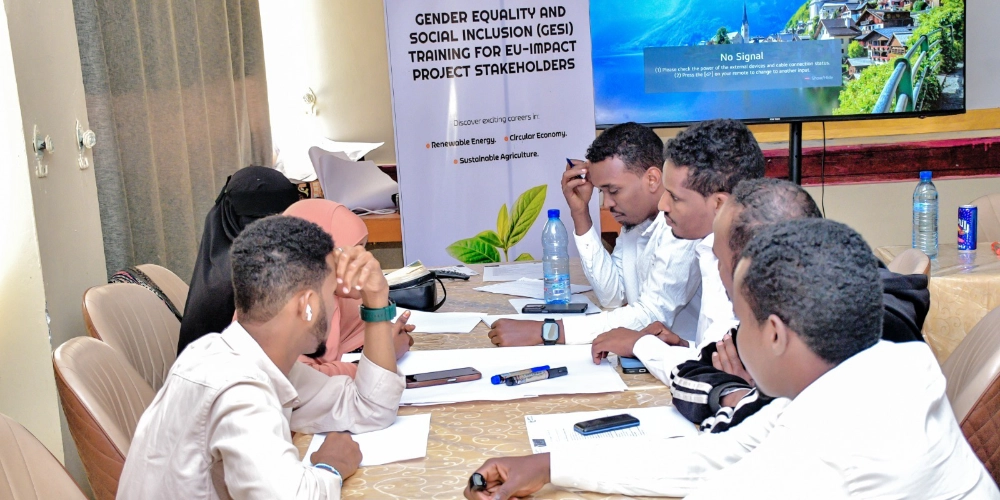
Gender Equality and Social Inclusion (GESI) training was delivered under the EU IMPACT project, funded by the European Union, in Somalia. The sessions addressed structural and social barriers limiting access to TVET and green skills for women, youth, and marginalised groups. They also strengthened institutional capacity to integrate GESI principles and promote more inclusive practices.
Employment creation through economic investment constitutes the most direct channel through which the Global Gateway seeks to influence irregular migration pressures in Somalia. Investments in energy, infrastructure, connectivity, and private sector development aim to expand productive economic activity and generate jobs, particularly for urban youth operating in informal labour markets. Initiatives such as the Somalia–Horn of Africa Infrastructure Integration Project and the Green Energy and Economic Development (GEED) programme target sectors with high employment multipliers, including construction, energy access, and small enterprise growth.
These interventions are especially relevant given that economic precarity is the most frequently cited driver of youth migration in Somalia. By lowering barriers to market participation, improving access to finance, and expanding basic infrastructure, Global Gateway investments can improve income opportunities and reduce the necessity of migration as a livelihood strategy. However, the migration impact of economic investment is not automatic. If job creation is limited in scale, concentrated in capital-intensive sectors, or inaccessible to marginalised youth, migration pressures may persist. The effectiveness of this pillar therefore hinges on whether investments translate into visible, inclusive employment gains at community level, where migration decisions are made.
For Somalia, the EU Global Gateway presents both an opportunity and a test. If effectively implemented, development-led investments in infrastructure, skills, and private sector growth can begin to address the economic exclusion and institutional fragility that underpin youth irregular migration. Improved access to energy, connectivity, and finance has the potential to expand local labour markets, particularly in urban centres where migration pressures are most acute. However, the impact on migration dynamics will depend on whether these interventions translate into visible, accessible opportunities for young people, including within informal and transitional sectors where most employment is currently generated. Weak absorptive capacity, fragmented governance, and insecurity remain significant constraints, meaning that without sustained capacity-building and local ownership, Global Gateway projects risk improving macro-level indicators without altering everyday livelihood realities that shape migration decisions.
For Europe, the Global Gateway represents a strategic shift from short-term containment towards a longer-term effort to influence migration drivers at source. Development-led engagement in Somalia offers the possibility of reducing irregular migration pressures over time while contributing to broader objectives such as regional stability, trade, and energy security. Yet expectations must be carefully managed. The relationship between development investment and migration outcomes is neither immediate nor linear, and political pressure for rapid reductions in arrivals risks undermining support for structurally focused approaches. The EU’s credibility will therefore hinge less on short-term migration statistics and more on its ability to sustain engagement, coordinate across institutions, and demonstrate that partnership-based development can complement—rather than replace—migration management objectives.
Ultimately, the implications for both Somalia and Europe converge around time, trust, and alignment. For Somalia, Global Gateway interventions must resonate with youth realities and strengthen state capacity in ways that endure beyond project cycles. For Europe, success depends on recognising migration as a long-term structural issue rather than a crisis to be solved quickly. Where these perspectives align, the Global Gateway has the potential to reshape not only migration dynamics, but the broader terms of EU–Somalia cooperation.
The EU’s Global Gateway represents a strategic shift from securitised migration control toward addressing the structural conditions shaping youth mobility in Somalia. Its emphasis on education, institutional capacity, and employment creation offers a credible framework for influencing migration decisions over time. However, development-led approaches can only affect irregular migration if investments translate into visible opportunities, stronger governance, and improved prospects for young people. In fragile contexts such as Somalia, managing expectations, strengthening local ownership, and sustaining long-term engagement will be as critical as the scale of investment itself.
Horn Report’s mission is to shape regional narratives and deliver strategic insight that empowers decision-makers to navigate the Horn of Africa’s complexities within an evolving global landscape.