On January 29, 2024, Ethiopian federal forces executed at least 89 civilians in Merawi town, Amhara region, a massacre that exemplifies how Ethiopia's fiscal recentralisation has fueled political violence across Tigray, Oromia, and Amhara since 2018. While ethnic tensions dominate headlines, federal subsidies to these regions lost 60% of their purchasing power between 2019/20 and 2023/24 due to inflation and budget stagnation, even as defense spending surged 150%. This fiscal squeeze has left over 24,000 dead and millions displaced, as regional governments lost capacity to deliver services, elites were alienated from patronage networks, and populations interpreted budget cuts as federal hostility, transforming economic grievances into armed resistance by groups like the Fano militia, whose clash with federal forces preceded the Merawi killings.
This brief analyses the relationship between fiscal autonomy and political violence in Ethiopia's three most conflict-affected regions from 2018 to 2024. The findings carry urgent implications: as Amhara violence reached historic highs in 2024 (1,414 events) and Tigray tensions resurge in 2025, Ethiopia's federal experiment hangs in the balance.
Ethiopia's 1995 Constitution established ethnic federalism, granting significant autonomy to nine regional states (later eleven), but this political decentralisation rested on fragile fiscal foundations, with regions depending heavily on federal block grants, Amhara for 77% of its budget, Tigray 63%, and Oromia 59%. The politically contested grant allocation formula, revised eight times between 1995 and 2017, saw Tigray's share plunge from 10.5% in 1995, when the TPLF dominated the federal coalition, to just 6.0% by 2017 as it lost power, making regions acutely vulnerable to federal budget decisions. When Abiy Ahmed became Prime Minister in April 2018, promising democratic reforms and national unity, many hoped for a new era, but fiscal centralisation accelerated instead, further undermining regional autonomy.
Despite inflation averaging 27% annually, federal subsidies to Tigray, Oromia, and Amhara barely increased from ETB 128.6 billion in 2019/20 to ETB 129.7 billion in 2023/24, resulting in a catastrophic 60% collapse in real purchasing power, with Tigray's real allocation shrinking from ETB 12.3 billion to ETB 4.9 billion, Amhara's from ETB 44.1 billion to ETB 17.5 billion, and Oromia's from ETB 72.2 billion to ETB 27.9 billion. This fiscal starvation occurred as federal spending priorities shifted dramatically: defense spending surged 150% from ETB 20 billion (2020/21) to ETB 84 billion (2022/23) through a supplementary budget allocating ETB 90 billion to the military, while debt servicing climbed 112% to become the most extensive budget line at ETB 159.2 billion (27.8% of federal spending), causing regional subsidies' share of the federal budget to plummet from 37.2% to 27%.
The composition of regional budgets deteriorated further. Capital expenditure, which is funding for infrastructure like schools, health facilities, and roads, declined from 35% to approximately 30% ofregional budgets, while recurrent costs (mainly salaries) consumed an ever-larger share. Regional governments found themselves trapped: unable to invest in development, unable to deliver services, yet still responsible for basic governance.
As regional fiscal capacity collapsed, political violence exploded. ACLED data records 541 conflict events across Tigray, Oromia, and Amhara in 2018. By 2024, that figure had quintupled to 2,389 events, a 341 % increase. Reported fatalities surged even more dramatically: from 1,114 in 2018 to 6,614 in 2024, a 494% increase. Cumulatively, the three regions experienced 7,351 conflict events and 24,255 fatalities between 2018 and 2024.
Yet the violence did not unfold uniformly. Each region exhibited distinct patterns shaped by its political context and fiscal vulnerabilities, but all shared the common denominator of fiscal stress coinciding with escalating conflict.
Tigray's violence trajectory was the most affected. In 2018-2019, the region recorded just 28 conflict events total, reflecting relative calm despite TPLF marginalisation from federal power. This peace was shattered on November 4, 2020, when federal forces attacked the TPLF's Northern Command, triggering a devastating civil war.
While the Tigray war's humanitarian catastrophe dominated attention, the fiscal dimension was central to understanding the conflict: federal subsidies were effectively suspended during the war, and though the 2021/22 budget nominally allocated ETB 22.8 billion, nearly double the pre war figure, actual disbursement remains unclear, and even this nominal increase represented a 28% real value decline due to 34.5% inflation. By 2022/23, after the November 2022 Pretoria ceasefire, Tigray's allocation had dropped to ETB 12.3 billion, 52% below its 2019/20 real value, leaving the regional government without resources for reconstruction as conflict events peaked at 480 in 2021 (with battles comprising 71.2% of violence, the highest share among the three regions), while federal and Eritrean forces used mass starvation as a weapon through aid blockades, compounding the fiscal suspension's effects and leaving hundreds of thousands displaced and dependent on international aid.
Tigray's case demonstrates fiscal policy as an instrument of war. Budget suspension was not merely an administrative decision but a deliberate tool to weaken the TPLF by denying it resources to govern. The strategy succeeded militarily as the TPLF was forced to negotiate, but it left Tigray devastated and its population traumatised. Even now, with subsidies partially restored, the 60% real value loss means Tigray cannot rebuild.
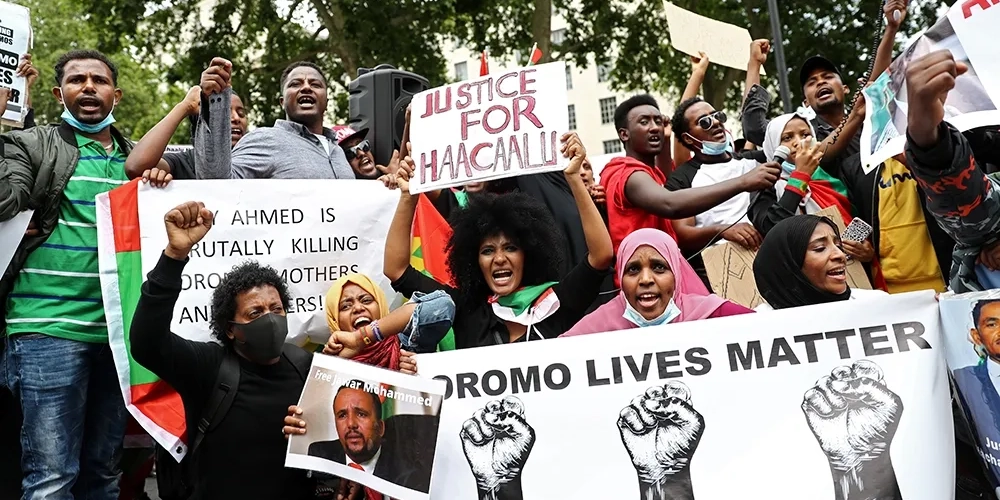
Oromia experienced chronic insurgency rather than explosive war, entering 2018 with high conflict ( 413 events) from the 2014-2018 Qeerroo protests, which briefly declined to 110 events in 2019 as Abiy promised reforms, but surged to 727 events in 2022 which was the region's bloodiest year with 3,570 fatalities, as the Oromo Liberation Army-Shane (OLA-Shane) insurgency intensified from 2020 onward. While the OLA-Shane fed on multiple grievancesAbiy's perceived betrayal of Oromo nationalism, singer Hachalu Hundessa's June 2020 assassination, and ethnic violence against Oromos, fiscal stress amplified these tensions as
Oromia's federal subsidy collapsed 61 % in real terms from ETB 72.2 billion (2019/20) to ETB 27.9 billion (2023/24), leaving the regional government unable to provide services in rural areas where OLA-Shane operates despite having the highest own-revenue capacity ( 41 % selffinancing), with schools closing, health posts understaffed, and roads deteriorating as the administration lost legitimacy and OLA-Shane positioned itself as defender of Oromo interests against a hostile federal government.
Violence in Oromia is more diffuse than in Tigray or Amhara: only 44.1 % of events are battles, while 41.8% are violence against civilians, often ethnic attacks. This reflects the insurgency's territorial ambitions and the government's brutal counterinsurgency, which has included mass detentions, drone strikes, and extrajudicial killings. Federal forces have accused Oromia's regional government of tolerating OLA-Shane, creating further friction between Addis Ababa and Oromia, friction rooted partly in fiscal disputes over autonomy and resources.
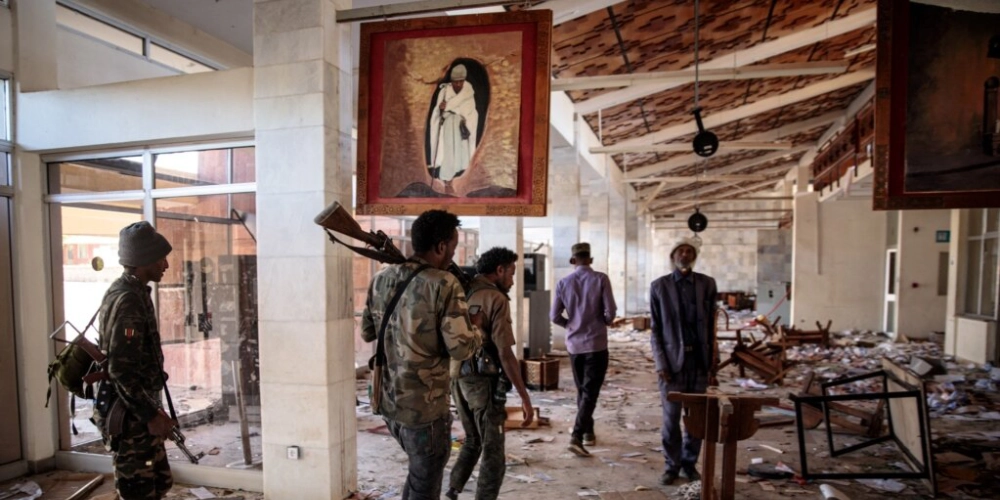
Amhara's violence trajectory proved most alarming that is delayed but explosive, remaining relatively stable through 2020 Gust 50 events) as Amhara forces allied with federal troops against Tigray, spiking to 505 events in 2021 when Tigrayan forces invaded, then declining to 196 events in 2022 before exploding to 600 events in 2023 and 1,414 in 2024 (the highest single-year total in the dataset) as the Fano militia turned against Addis Ababa. While the proximate causes were the April 2023 federal decision to dismantle regional special forces and Amhara's perceived sidelining in the Pretoria peace agreement, fiscal factors proved critical: as the most fiscally dependent region (77% federal grants), Amhara's government could not cope when subsidies lost 60% of their real value, leaving services deteriorated, war-damaged infrastructure unrepaired, and regional elites unable to deliver patronage or development, creating a vacuum that Fano filled by presenting itself as Amhara's defender. The government's response was declaring a state of emergency, mass detentions, drone strikes, including the Merawi massacre, escalating violence, locking the region in a vicious cycle where battles now comprise 70. 7% of events in a chronic insurgency resembling Oromia's pattern more than Tigray's conventional war.
Amhara's fiscal crisis is particularly acute because of its low revenue capacity (23% self financing). Unlike Oromia, which can partially offset federal cuts with local taxes, Amhara has few alternatives. The 60% real value collapse in federal subsidies directly translated into state collapse, creating the conditions for Fano's rise.
The correlation between fiscal decline and violence escalation across all three regions is striking, but correlation is not causation. Three mechanisms explain why fiscal recentralisation intensified political violence:
Regional State Capacity Collapse: As federal subsidies lost 60% of their real value and capital budgets decreased from 35% to 30% ofregional allocations, regional governments struggled to provide basic services. Schools were understaffed, health facilities lacked supplies, roads deteriorated, and agricultural extension services disappeared. Citizens blamed regional governments for failure and the federal government for fiscal strangulation. This dual legitimacy crisis allowed armed groups like OLA-Shane in Oromia and Fano in Amhara to exploit these weaknesses, offering minimal governance in areas they control.
Elite Alienation and Patronage Breakdown: Regional officials and local elites rely on state resources to reward supporters, fund community projects, and maintain political networks. As budgets collapsed, governors and administrators could no longer deliver patronage. In Amhara, officials couldn't negotiate with Fano due to a lack of resources. In Oromia, elites defected to OLA-Shane when development funding stopped. In Tigray, post-war reconstruction stalled without funds, fueling frustration and TPLF factionalism. Fiscal austerity weakened regional governments' political machinery.
Federal Signaling and Perceived Hostility: Budget cuts, especially when accompanied by defense spending explosions, signal federal priorities. When the federal government allocated ETB 90 billion to suppress the Tigray war while starving regions of resources, it signaled that military control outweighs regional development. Regions saw fiscal recentralisation not as an economic necessity but as a political tool of punishment. Tigray viewed it as retaliation for TPLF recalcitrance. Oromia saw it as Abiy siding with Amhara interests. Amhara considered it betrayal after supporting the federal war effort. Such perceptions, whether accurate or not, shaped regional responses. When populations see the federal government as hostile, they mobilise defensively, and armed resistance ensues.
Ethiopia's experience offers a sobering lesson: in ethno-federal systems, fiscal policy is not merely economic, it is existential. When federal governments weaponise budgets, they trigger security spirals. Regions dependent on federal transfers for 60-77% of their budgets have few options when those transfers collapse in absolute value. They cannot maintain services, cannot co-opt elites, and cannot credibly govern. Violence becomes the language of fiscal grievance.
The pattern is consistent across cases. Tigray's war began after years of TPLF marginalisation and fiscal decline. Oromia's insurgency intensified as budgets eroded and rural areas fell into neglect. Amhara's explosion came when the fiscally weakest region faced the deepest cuts. In each case, fiscal stress preceded and enabled violence escalation.
Yet Ethiopia's crisis also suggests solutions. If fiscal recentralisation fuels violence, budgetary decentralization can reduce it, but only if designed carefully to avoid recreating the patronage networks and inefficiencies that plagued pre-2018 arrangements.
Restore Fiscal Autonomy Through Inflation Indexing: Federal subsidies should be automatically indexed to inflation to prevent future real value collapses. This would depoliticise budgeting by making adjustments technical rather than discretionary. Regions would gain predictability, enabling multi-year planning. The federal government would demonstrate commitment to genuine federalism rather than using fiscal policy as a control mechanism.
Increase Capital Budget Share to 40: Regional governments currently allocate only 30% of budgets to capital expenditure, down from 35% pre-conflict. This share should increase to at least 40% and be protected from cuts. Capital spending builds state capacity, schools, clinics, roads, and agricultural infrastructure, which legitimises governments and reduces violence drivers. Without it, regions remain trapped in a vicious cycle of service failure and instability.
Establish an Independent Federal Grant Commission: Currently, the federal government unilaterally determines both the total subsidy pool and its distribution across regions. An independent commission, modeled on South Africa's Financial and Fiscal Commission, would insulate grant decisions from political manipulation. The commission should include regional representatives, use transparent criteria, and publish all decisions. This would build trust and reduce perceptions that budgets are weapons.
Guarantee Multi-Year Formula Stability: The grant formula has been revised eight times since 1995, creating uncertainty and enabling political meddling. Future revisions should require supermajority support in the House of Federation and at least three years' advance notice. Regions need to know that fiscal arrangements will not change capriciously with the political winds.
Revive Conditional Grants for Conflict-Affected Areas: Ethiopia experimented with conditional grants focused on Millennium Development Goals from 2011 to 2014 before phasing them out. These should be explicitly revived for conflict reconstruction in Tigray, Oromia, and Amhara. Unlike block grants, conditional grants can target specific reconstruction needs, rebuilding schools destroyed in Tigray, repairing roads damaged in Amhara, restoring health facilities in Oromia, while ensuring funds are used effectively. International donors, reluctant to provide general budget support, might fund conditional grants for reconstruction.
Horn Report’s mission is to shape regional narratives and deliver strategic insight that empowers decision-makers to navigate the Horn of Africa’s complexities within an evolving global landscape.