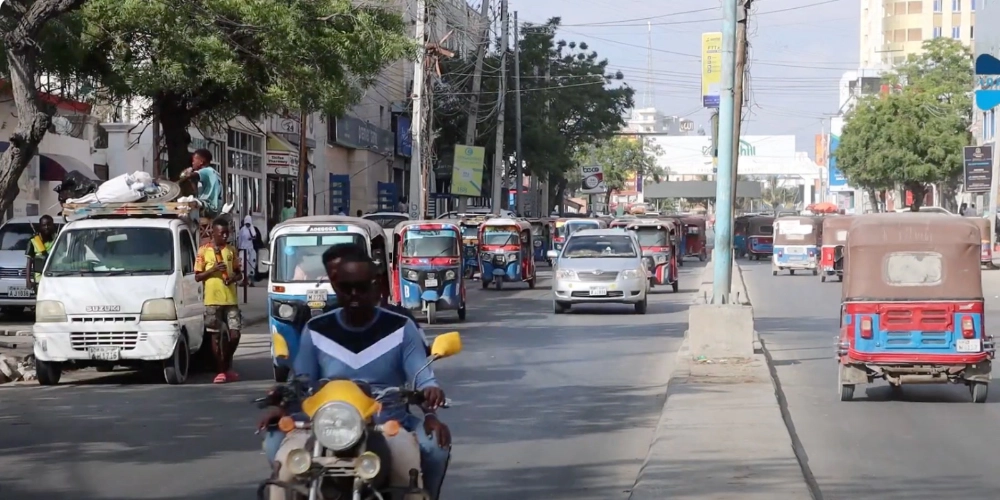
Mogadishu is growing quickly due to population increases, displacement, and migration from rural areas. This rapid growth is putting pressure on the city’s infrastructure and public services, which are struggling to keep up with a population now estimated at around 3 million, including over 1 million internally displaced persons. As a result, living conditions and economic opportunities for many residents are worsening. At the same time, youth unemployment remains very high around 70% in recent estimates. Many young people lack formal jobs and relevant skills, leaving them economically vulnerable. This situation increases frustration and makes some young people more likely to join informal armed groups or criminal networks, which threatens the city’s security. Mogadishu’s local economy and municipal infrastructure cannot handle the massive influx of displaced persons, returnees, and unemployed youth. This failure creates a large group of marginalised people who turn to militias, gangs, or extremist groups for income and purpose. This dynamic directly undermines Somalia’s national stabilisation efforts by fueling insecurity and eroding trust in governance. Without urgent action to expand jobs and services, the cycle of exclusion and violence will deepen, threatening long-term peace and development.
Mogadishu is the capital city of Somalia, the city’s population has surged to an estimated approximately 3 million in 2025, driven primarily by conflict-induced displacement, economic migration from rural areas and regional states, and diaspora returns amid relative stability. This rapid, largely unplanned growth exacerbated by Somalia's status as one of the world's fastest-urbanising nations overwhelms infrastructure and public services. Ongoing violence and insurgencies displace rural populations into Mogadishu, with conflict now a leading driver alongside drought. Somalia hosts nearly 4 million IDPs nationwide, over 1 million concentrated in the capital's informal settlements, where 32% of new displacements occurred between 2017-2018. This influx heightens urban vulnerability, as newcomers settle in peripheral districts like Daynile and Kahda with minimal services, amplifying risks of evictions and service collapse.
Limited opportunities in federal states push rural migrants to Mogadishu, drawn by wage labor (64% of households) and a construction boom fueled by remittances. High rural insecurity and resource scarcity compound this pull, transforming the city into Africa's most densely populated urban center and world’s second after Dhaka. Unplanned settlements result, straining water, sanitation, and housing, while evictions nearly 40,000 in early 2024 affect 75% of them women, disrupting livelihoods. Improved security since al-Shabaab's 2011/12 withdrawal prompts diaspora returns, boosting real estate and services but inflating land demand. Remittances exceed foreign investment, sustaining growth yet displacing IDPs and minorities via private land grabs. This dynamic links return-driven investment to exclusionary urban expansion, where weak governance fails to integrate newcomers. Uncoordinated growth burdens services: IDP settlements lack tenure security, health access, and sanitation, with peripheral areas worst affected. Projected 211,000 displacements through 2025 will overload Somalia, exacerbating overcrowding and humanitarian needs. Without spatial planning, these pressures perpetuate poverty cycles, undermine resilience, and risk social unrest.
Mogadishu's employment challenges stem from systemic barriers intertwined with Somalia’s labor market legacy from the 1991 civil war, which collapsed state institutions, destroyed economic infrastructure, and disrupted education with unemployment at 18.86% nationally in 2024, likely higher among urban youth, and up to 70% overall. Pre-war, Somalia sustained a skilled workforce in agriculture and manufacturing as a net exporter; today, import dependency prevails, with 65.5% lacking formal education and just 5% reaching secondary level by 2022, perpetuating poverty cycles by limiting income opportunities, eroding social stability, and fueling informal sector reliance.
The private sector, dominant in Somalia's economy and providing 95% of jobs, concentrates on low-productivity nontradables like retail, absorbing few entrants amid population surges. Micro and informal firms over 91% of jobs generate precarious employment without scalability, as conglomerates capture markets and block competition. This constrains formal job creation, linking urban influxes to heightened vulnerability without productive outlets.
Educational outputs fail to align with market demands, producing graduates unfit for private sector roles while vocational jobs remain vacant. Weak transitions from training exacerbate this, as curricula overlook employer needs in tradables like manufacturing. City’s universities emphasise theoretical degrees over practical competencies, leaving 60-70% of youth lacking basic digital or technical skills sought by firms. This mismatch not only displaces locals with expatriates but also hampers firm expansion, as unskilled labor raises operational costs and reduces productivity linkages across sectors. Consequently, firms hire foreign workers, deepening local unemployment and stifling competitiveness.
Vocational programs lag, offering skills like tailoring or IT but insufficiently scaled for demand, with low enrollment amid insecurity. This gap leaves youth over 80% under 35 unprepared for jobs, amplifying gender disparities where women face access barriers. Unaddressed, it sustains high underemployment, hindering structural transformation.
Corruption and nepotism distort job allocation, favoring clan relatives over merit and eroding public trust in institutions. Public sector hiring exemplifies this, displacing qualified candidates and fostering inefficiency. Clan-based networks dominate private recruitment too, sidelining IDPs and minorities from opportunities in construction or services. The Heritage Institute identifies nepotism and clan favoritism as key youth unemployment drivers, with 44% citing them as top barriers; politicised public recruitment creates merit bottlenecks. These practices entrench inequality, linking weak governance to persistent unemployment as networks exclude outsiders and undermine skill incentives.
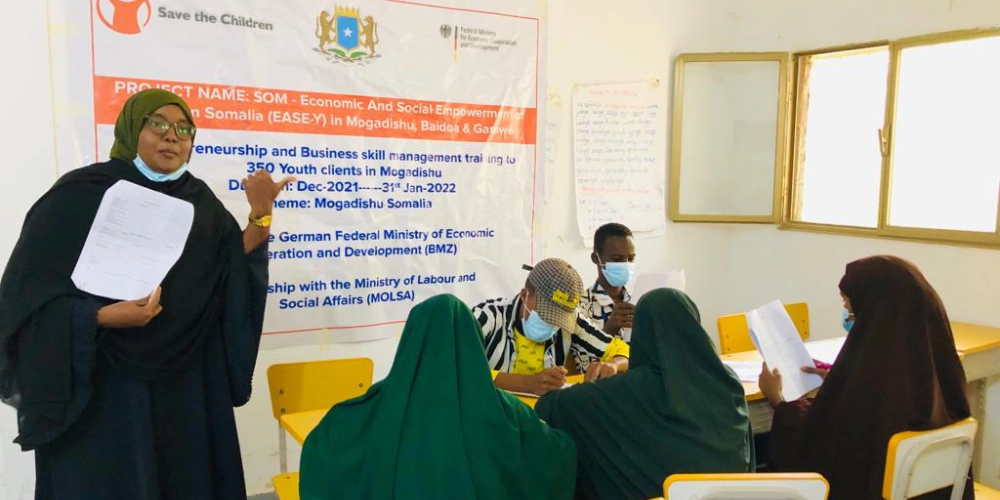
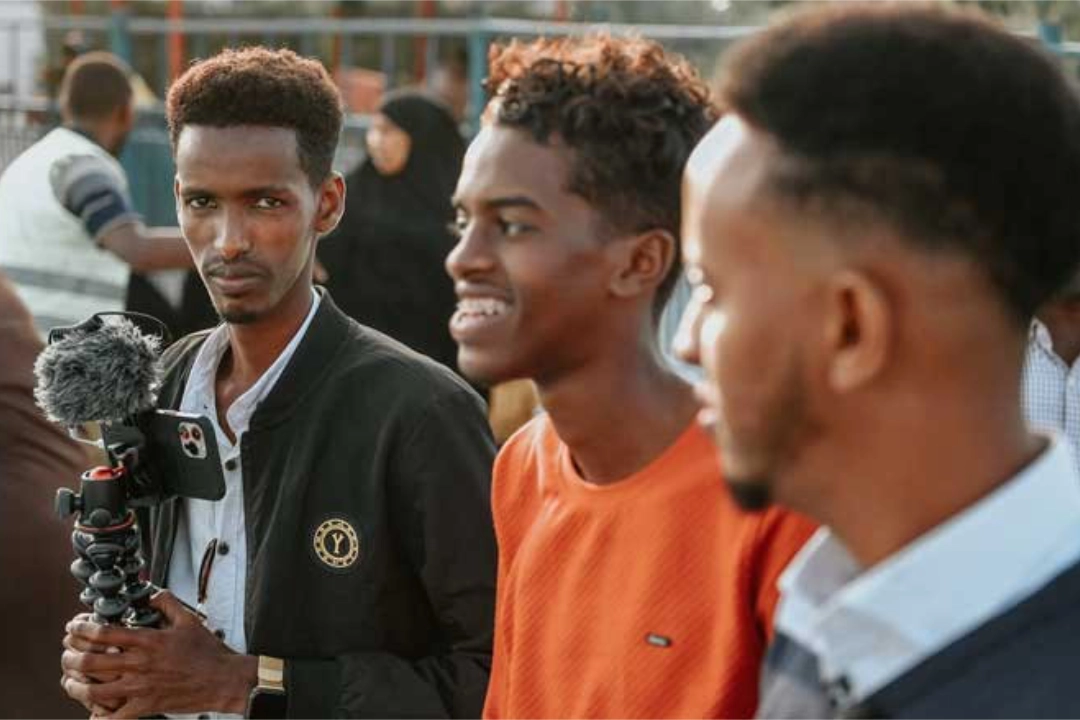
Empowering Mogadishu’s youth with the entrepreneurial and business skills needed to turn ideas into livelihoods and tackle unemployment through locally driven solutions.
Urban growth and joblessness in Mogadishu directly fuel informal economies and criminal networks, as displaced youth facing 70% unemployment resort to unregulated trade, hawking, and illicit activities for survival. Decades of clan conflicts, militias, robberies, and al-Shabaab insurgency have killed thousands and displaced millions in Somalia, cities like Mogadishu enduring bombings and escalating extremism that exploits economic voids.
Youth exclusion from labor markets amid poor governance and clan prejudice drives recruitment into violent groups, with two-thirds of al-Shabaab joining for economic motives like stipends over legal prospects. Al-Shabaab channels urban frustration into militant strength, targeting disaffected university graduates for their informal "taxation" (extortion) and Amniyat intelligence units, repurposing skilled human capital to erode state control. In rapidly expanding districts, marginalised young men turn to Ciyaal Weero gangs, which have dominated peripheries since late 2021 using light weapons and social media for theft or turf control, eroding neighborhood stability and amplifying homicide rates in IDP-heavy areas.
Drug influxes into the Banaadir Region intensify gang activities, with illicit substances like taboo tobacco, narcotics, psychotropics, and misused opioids smuggled or diverted legally fueling youth criminality and volatility. These groups run parallel to and often compete against official policing, particularly in new districts where state authority is absent, forcing authorities to maneuver a "political marketplace" blending clan ties, desperation, and ideology. Overstretched police divert efforts to reactive crackdowns on turf wars and evictions, unable to curb gang proliferation fueled by desperation. Armed groups exploit this vacuum, offering $50-200 monthly exceeding informal wages to vulnerable youth, perpetuating retaliation cycles and vigilantism.
This forms a vicious loop: job scarcity predisposes youth to crime and insurgency, financing arms via informality and weakening authorities further, as grievances from corruption sustain conflict. Unchecked, urban pressures cascade into systemic instability, undermining development and investor confidence.
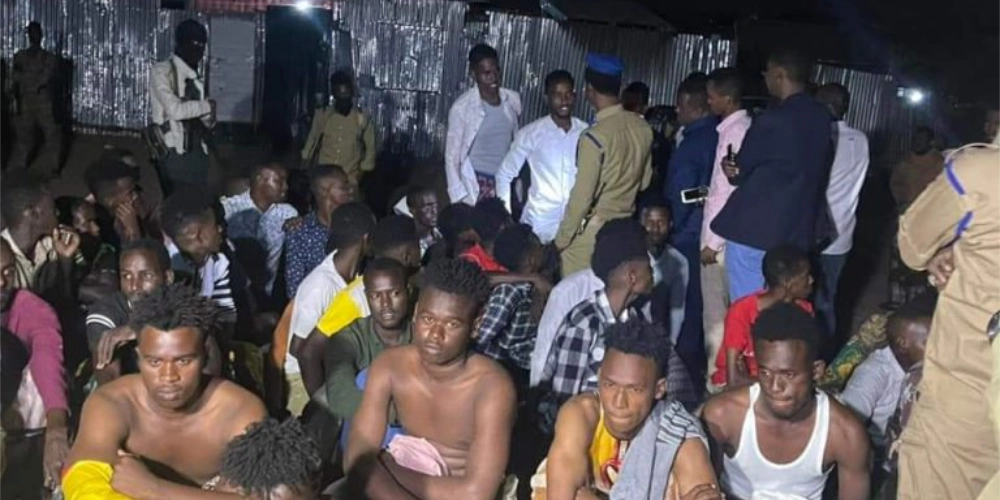
Mogadishu police operation in 2024 targeting ciyaal weero gangs, reinforcing public safety and restoring community confidence in the rule of law.
Rapid urbanisation and economic exclusion in Mogadishu overwhelm the Banaadir Regional Administration (BRA), threatening national stabilisation as the population nears 3 million with 4.36% annual growth. Unplanned expansion widens the gap between demographics and capacity, leaving outer districts without waste management, sanitation, or healthcare. These intertwined trends of rapid urbanisation and youth unemployment generate far-reaching political and social consequences eroding governance legitimacy, fueling insecurity, and deepening divisions that threaten Mogadishu’s long-term stability, effective control, and sustainable urban development.
This state absence erodes municipal trust, as informal settlements without police breed Ciyaal Weero gangs and al-Shabaab recruitment amid 67% youth unemployment, widening the divide between communities and authorities. Ciyaal Weero thrives on rampant unemployment, substance abuse, absent government response, parental neglect, and social media allure, drawing vulnerable youth into violence — though recent crackdowns have minimised their presence last year. Al-Shabaab exploits jobless frustration by recruiting unemployed youth with income promises, channeling them into extremist actions that reinforce violence cycles and insecurity. Security forces, focused on elites, fail to protect these areas, weakening government's control and public confidence needed for lasting peace. Perceived corruption further alienates young people, hindering intelligence sharing and de-escalation efforts; high youth unemployment compounds distrust, with marginalised youth refusing police cooperation amid evictions and rising crime.
Unmanaged growth turns land fights, displacement, and job shortages into political issues, fueling youth anger against national plans like the National Transformation Plan 2025–2029. Governance failures compound this through hiring practices that exclude local youth, as public institutions, donor projects, and contractors favor expatriates over qualified graduates citing capacity concerns, blocking skills transfer and deepening resentment toward authorities and partners. Favoritism toward elites excludes low-income classes, displaced residents, and the jobless, building frustration that fragments social bonds in outer zones where over 80% are under 35, including over 1 million displaced persons overwhelming services like water and waste, sparking health crises. Unresolved grievances such as land disputes and power shortages heighten political risks, enabling spoilers like al-Shabaab to exploit discontent and delegitimise central authority, with protests escalating into anti-government actions spilling nationally.
Youth channel resentment into gangs or extremists for income, perpetuating violence cycles amid drug-fueled volatility; communities endure rising insecurity and service voids, stalling joint action against evictions; security actors lose legitimacy, facing insurgent gains from poor cooperation. Unequal access to security, resources, and jobs segregates IDPs, returnees, low-income residents, and others, with peripheral groups facing exclusion and breeding resentment that fractures cohesion, weakening urban resilience and national unity. These problems spread beyond city limits: poor services enable rivals like al-Shabaab, block aid flows, and undermine stability, positioning Mogadishu as a vulnerability unless inclusive policies integrate newcomers, create jobs, and rebuild trust. Together, these dynamics form a vicious cycle: governance shortfalls fuel distrust and grievances, amplifying political vulnerabilities and social fragmentation that threaten stabilisation. Urgent, integrated reforms in services, employment, and inclusive security are essential to rebuild legitimacy and foster cohesion.
To address youth unemployment and enhance political-security stability in Mogadishu, the following targeted measures build on prior urban-focused actions:
Banaadir Regional Administration (BRA) should expand vocational programs aligned with local job markets, such as construction and services, while offering businesses subsidies to hire disadvantaged youth from informal settlements.
Establish regular forums between local authorities Administration, youth leaders, and residents to co-design security patrols and grievance mechanisms, fostering cooperation with police.
Provide low-interest loans, grants, and mentorship to young entrepreneurs in high-density areas, fostering self-employment and income generation to counter militia recruitment incentives.
Target underprivileged settlements with access to water, sanitation, healthcare, and electricity, partnering with international donors for large-scale projects like road networks. Develop public transit to ease mobility and invest in digital tools for efficient service delivery, boosting economic activity and quality of life.
Disrupt recruitment via community narratives and alternatives, partnering internationally to promote tolerance while investing in basic services like health and sanitation in vulnerable settlements.
BRA should create comprehensive frameworks emphasising zoning, land tenure policies, and affordable housing for IDPs and returnees to prevent informal settlements. Engage communities for inclusive outcomes, including housing, transportation, and sanitation, mitigating grievances that fuel political risks. Support public-private alliances for low-income housing and incorporate environmental sustainability.
Implement transparency reforms, including audits and oversight bodies, to rebuild legitimacy eroded by service failures. Capacity-building training in urban planning and financial management equips officials to handle unplanned growth, enhancing public trust.
Leverage UN, World Bank support for funding and expertise; share best practices via forums; coordinate cross-border planning for migration and environment to bolster national stabilisation.
In conclusion, this analysis examined rapid urbanisation, youth unemployment, and their security implications in Mogadishu under Banaadir Regional Administration. Mogadishu’s stability hinges on managing rapid demographic growth from displacement and curbing 70% youth unemployment, which fuels militia recruitment and governance erosion. These pressures spawn vicious cycles of exclusion, insecurity, informal settlements, distrust, and political risks that undermine national stabilisation.
Strategic interventions like youth skills training, entrepreneurship support, counter-extremism efforts, inclusive planning, and partnerships offer viable paths forward. Banaadir Regional Administration, Government and donors must act urgently: addressing urbanisation and unemployment is not merely a development priority but a critical counter-terrorism and stabilisation imperative to avert broader conflict. Implementing these recommendations will bolster municipal capacity, foster social cohesion, and secure long-term urban stability for residents.
This analysis examined rapid urbanisation, youth unemployment, and their security implications in Mogadishu under Banaadir Regional Administration. Mogadishu’s stability hinges on managing rapid demographic growth from displacement and curbing 70% youth unemployment, which fuels militia recruitment and governance erosion. These pressures spawn vicious cycles of exclusion, insecurity, informal settlements, distrust, and political risks that undermine national stabilisation.
Strategic interventions like youth skills training, entrepreneurship support, counter-extremism efforts, inclusive planning, and partnerships offer viable paths forward. Banaadir Regional Administration, Government and donors must act urgently: addressing urbanisation and unemployment is not merely a development priority but a critical counter-terrorism and stabilisation imperative to avert broader conflict. Implementing these recommendations will bolster municipal capacity, foster social cohesion, and secure long-term urban stability for residents.
Horn Report’s mission is to shape regional narratives and deliver strategic insight that empowers decision-makers to navigate the Horn of Africa’s complexities within an evolving global landscape.