The unresolved dispute between Somalia and Somaliland originates from the collapse of the Somali state in 1991. In May 1991, Somaliland unilaterally declared a self-governing administration after the Burao conference, seeking to restore local stability and governance. Since then, Somaliland has maintained a stable environment, characterised by functioning democratic institutions and repeated elections, distinguishing it from southern and central Somalia, which continues to face conflict and institutional fragility.
Despite over three decades of diplomatic efforts, Somaliland has not obtained formal international recognition, largely due to the prioritisation of Somalia's territorial integrity and concerns that recognition could undermine the federal system and regional stability.
Nevertheless, Somaliland has pursued international engagement and external partnerships to consolidate its governance capacity and promote its political narrative.
Somalia's federal system, formally established in 2012, continues to experience significant limitations.
The federal government struggles with constrained authority over member states and ongoing insecurity, which historically hinder productive negotiations with Somaliland. Previous initiatives to facilitate dialogue, including Turkey-mediated efforts and Djibouti, have yielded limited results.
Israel's recognition of Somaliland in December 2025 represents a major geopolitical development. Strategically, Israel seeks greater influence in the Red Sea corridor and protection of maritime trade routes. For Somaliland, recognition enhances its international profile and diplomatic engagement, but it provokes opposition from the Federal Government of Somalia and introduces heightened uncertainty among regional and international actors.
The regional environment is complicated by competing interests among Ethiopia, Kenya, Djibouti, and Gulf actors, alongside AU norms prioritising state sovereignty. Internal divisions, particularly in Puntland, Jubaland, and contested regions like Sool and Sanaag, further amplify the complexity, where local authorities navigate federal alignment, security considerations and external patronage. Finally, extremist groups such as Al-Shabaab remain capable of exploiting political fragmentation, highlighting how external recognition can serve both as an early warning indicator and a potential trigger for escalation of conflict.
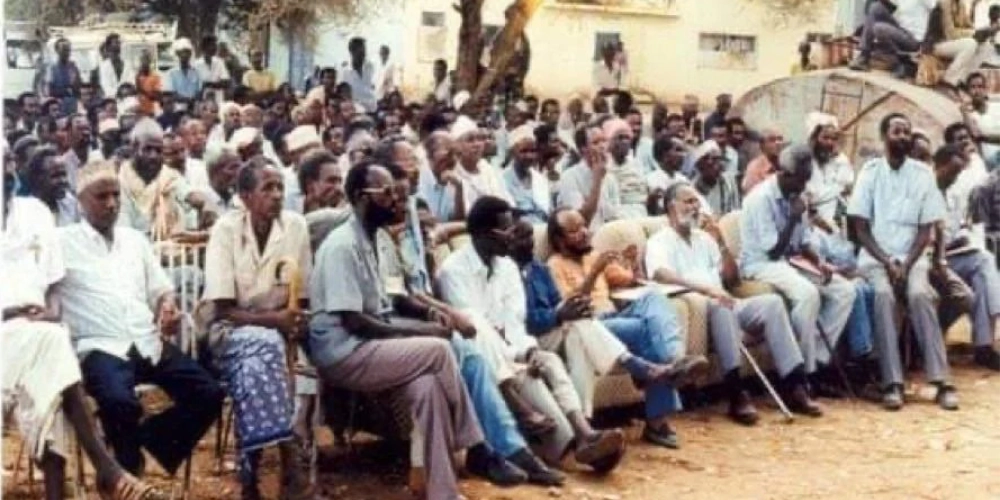
May 1991, Burco (Burao): A month-long gathering of northern Somali clan elders and SNM leaders that proved pivotal—culminating in Somaliland’s declaration of independence.
Israel's recognition of Somaliland acts as a catalyst for certain federal member states (FMS) to pursue political and economic initiatives independently, within the scope of their constitutional mandate, while still maintaining coordination with Mogadishu. Some federal member states exemplify this dynamic. Puntland, in accordance with its constitutional framework, exercises a degree of self-administration in managing internal affairs pending the establishment of a fully functional federal system. This approach reflects its mandate to make certain decisions independently, without representing an outright separation. Similarly, Jubaland has exercised autonomous policy decisions;The 2024 Kismayo elections provoked confrontation when Mogadishu rejected the results, prompting the Somali federal government to deploy troops to Jubaland, which led to clashes between the two sides and caused casualties.
The financial, logistical, and military support provided by external actors, including the United Arab Emirates, further enables these regions to implement strategic initiatives within their constitutional remit.
These developments indicate that Israel's recognition may reinforce tendencies among federal member states to pursue quasi-independent policy decisions. This could heighten the risk of political fragmentation, reduce the federal government's ability to maintain a cohesive national agenda, and complicate future negotiations with Somaliland.
External recognition of Somaliland may paradoxically encourage closer alignment with Mogadishu in some regions. Areas claimed by Somaliland but under federal influence, notably Sool and Sanaag, have resisted Hargeisa's authority. Following the 2023 clashes, local leaders established the North Eastern administration aligned with the Federal Government of Somalia, supported through political recognition, economic assistance, and development engagement. In Awdal, while remaining under Somaliland administration, segments of the population continue to support Somali unity. Conversely, other actors most notably Puntland, may intensify coordination with Somaliland as a strategic response to perceived federal encroachment. This convergence is increasingly shaped by the growth of secessionist tendencies within Puntland, rooted in elite dissatisfaction with Mogadishu's centralizing impulses and contested resource allocation. Together, these dynamics underscore the emergence of divergent regional strategies in response to external recognition and shifting center-periphery relations within Somalia.
Strengthened alignment in these contested territories demonstrates how external recognition of Somaliland can indirectly consolidate federal cohesion in regions supporting the federal government. It also highlights the federal government's potential to leverage local grievances to reinforce national unity, counterbalancing centrifugal pressures in regions exercising independent policy decisions like Puntland and Jubaland.
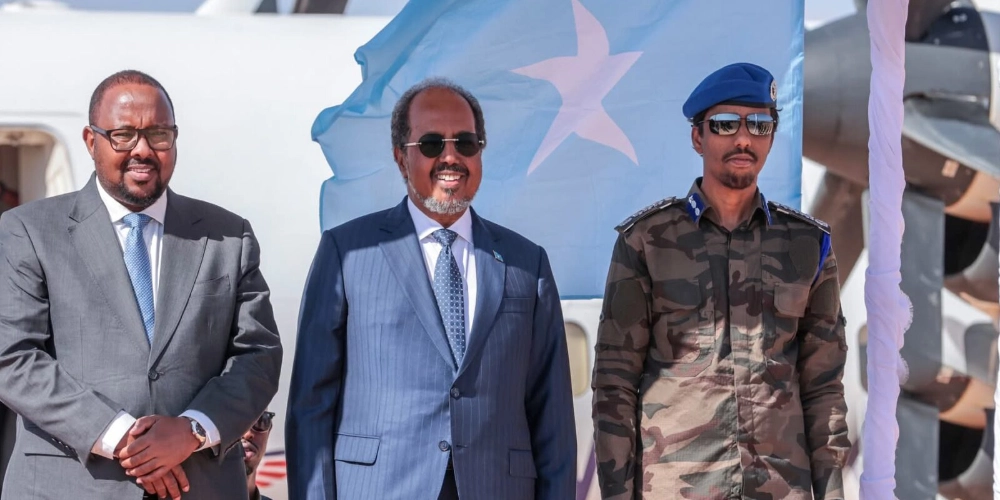
Las Anod, 17 January 2026: Federal President Hassan Sheikh Mahmoud with newly appointed North Eastern State President Abdikhadir Ahmed Aw-Ali and Federal Police Commissioner Sad Osman Abdullahi at the inauguration ceremony.
Israel's recognition intersects with broader geopolitical competition in the Hom of Africa. Ethiopia, concerned with maritime access, may seek to revive the 2024 Memorandum of Understanding (MoU) with Somaliland, granting access to strategic port facilities. Djibouti has opposed recognition due to concerns over Berbera Port and Red Sea security, while Kenya and Ethiopia maintain strategic silence, reflecting cautious recalibration of regional alliances. Gulf actors also exert significant influence: the United Arab Emirates supports both Somaliland and Puntland through financial and security assistance, while Saudi Arabia and Qatar align more closely with the Federal Government of Somalia, reflecting broader Saudi-UAE divergences, including tensions evident in Yemen, that increasingly shape competitive influence in Somalia.
Recognition acts as a trigger for regional realignment, creating opportunities and risks. It may encourage strategic engagement between federal-aligned states and external powers while simultaneously intensifying competition over influence, maritime access, and security control.
This environment increases the likelihood of miscalculations or proxy confrontations across the Hom of Africa.
The 2024 MoU between Ethiopia and Somaliland, granting Ethiopia access to a 20-kilometre coastline and strategic facilities, remains critical when assessing early indicators. While suspended under international pressure, Israel's recognition may prompt Ethiopia to revisit the agreement to secure maritime and security interests. Historically, Somalia-Ethiopia relations have been defined by territorial disputes and strategic competition, suggesting that renewed Ethiopian engagement with Somaliland could affect Mogadishu's federal authority.
Ethiopia's potential recalibration serves as an early warning indicator of regional stress. Renewed engagement with Somaliland could incentivise federal member states to reassess their allegiances, particularly in border regions, while weakening the federal government's leverage over internal political disputes.
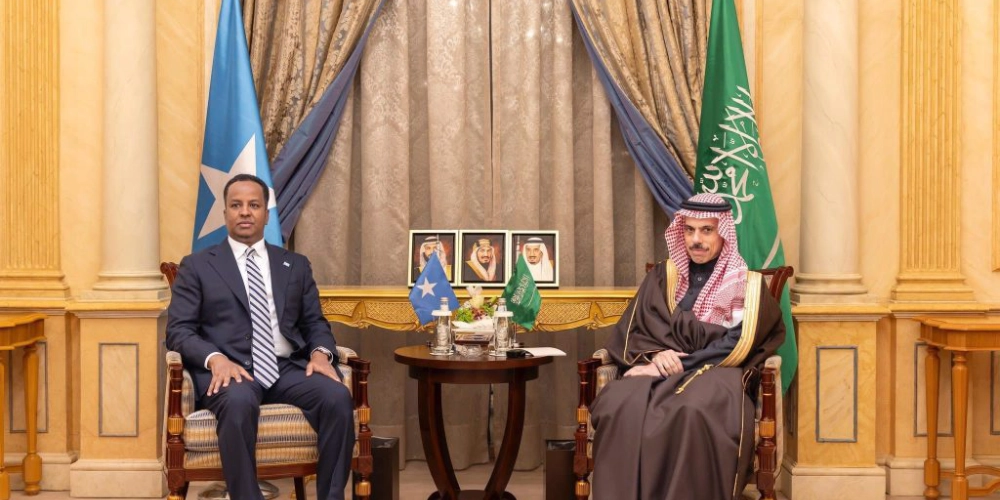
Riyadh meeting: Somalia’s Foreign Minister H.E. Abdisalam Abdi Ali met Saudi Foreign Minister H.R.H. Prince Faisal bin Farhan to discuss support for Somalia’s sovereignty and territorial integrity.
Al-Shabaab is estimated to command over 7,000 active fighters, concentrated in central and southern Somalia, controlling strategic corridors and local communities. Israel's recognition of Somaliland provides material for the group to frame Somalia as fragmented and externally manipulated. Messaging portrays the federal government as incapable of defending national unity while highlighting foreign interference in Somali affairs. Al-Shabaab can exploit divisions between Mogadishu and semi-autonomous states, bolstering recruitment, ideological reach, and operational legitimacy.
The recognition indirectly strengthens extremist narratives, potentially intensifying radicalisation and localised violence. It underscores the intersection between foreign policy shocks and domestic security vulnerabilities, emphasising the need for robust coordination across the federal system to mitigate exploitation by armed groups.
Somalia's federal institutions face chronic limitations in governance, coordination and territorial administration. Responses to Israel's recognition have revealed fragmentation: while some member states condemned the recognition and reinforced federal alignment, others, notably Puntland and Jubaland, remained silent or pursued independent action. Concurrent electoral transitions exacerbate these vulnerabilities, creating uncertainty around federal authority, intergovernmental dispute resolution and implementation of national policies.
The federal government's constrained capacity to manage external shocks serves as an early warning indicator of potential conflict escalation. Institutional weakness amplifies the influence of external actors, incentivises unilateral regional behavior and allows extremist groups to capitalise on governance gaps, highlighting systemic risks to Somalia's political cohesion.
Israel's recognition of Somaliland transforms the early warning indicators outlined above into a more complex and volatile risk environment for Somalia. While recognition does not in itself trigger immediate large-scale violence, it acts as a catalytic geopolitical shock, interacting with pre-existing institutional fragilities, unresolved sovereignty disputes and regional rivalries. The main risks lie not in sudden collapse but in gradual political fragmentation, security deterioration and the strategic exploitation of uncertainty by state and non-state actors.
At the domestic level, the most immediate concern is the acceleration of federal fragmentation. Recognition may embolden certain federal member states or regional authorities to pursue unilateral political or economic initiatives, weakening Mogadishu's coordinating authority. Such behaviour could deepen mistrust between the federal government and member states, resulting in political stalemates, disputes over resource control and contested external partnerships.
A related domestic risk involves localised instability in politically sensitive areas. Regions with mixed loyalties or unresolved administrative status are particularly vulnerable to tensions as political actors reposition in response to shifting regional and international dynamics. While these tensions may not escalate into sustained armed conflict, they increase the likelihood of sporadic violence, elite mobilisation, and security incidents that further strain limited state capacity.
Institutional paralysis compounds these risks. As political attention focuses on managing diplomatic fallout and internal realignments, governance and service delivery may weaken. This creates openings for informal power brokers and armed actors to exploit governance gaps, particularly in peripheral regions where federal authority is contested.
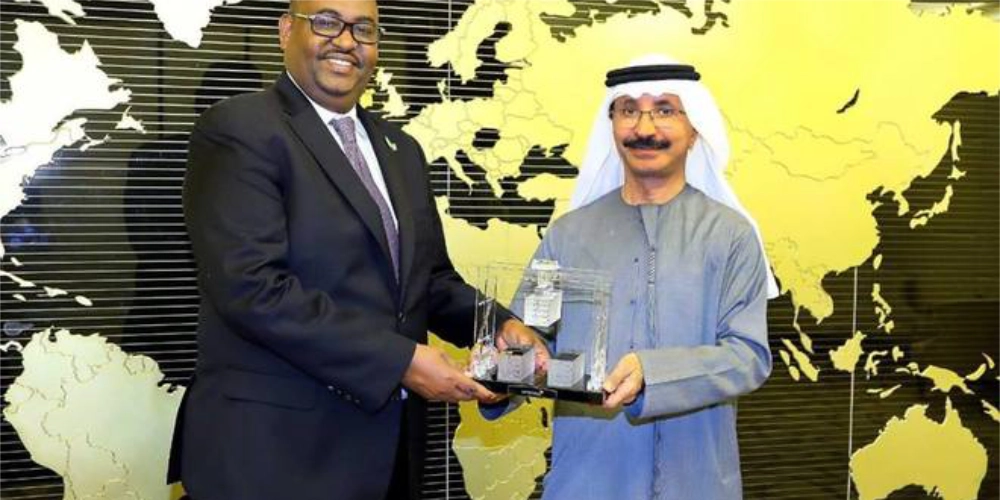
Bosaso port talks: Puntland’s president met DP World’s chairman on Bosaso expansion—raising concerns over bypassing Somalia’s federal government and undermining national sovereignty.
Beyond Somalia, Israel's recognition introduces new variables into an already competitive regional landscape. Ethiopia, Djibouti, Kenya and Gulf actors may recalibrate their engagement strategies, weighing economic, security and diplomatic interests. Such adjustments could intensify regional rivalries in the Hom of Africa and the Red Sea corridor.
The Gulf states play a central role in this dynamic. The UAE maintains a presence and operational influence in Somaliland, Puntland and Jubaland. The Somali federal government has formally withdrawn from its security and commercial agreements with the UAE, affecting strategic locations such as Berbera and Bosaso. The UAE seeks to maintain its presence with the support of these administrations, perceiving the federal government as lacking effective control over these areas, which indirectly diminishes Mogadishu's capacity to enforce authority.
Conversely, Saudi Arabia and Qatar support the federal government, with Saudi Arabia recently enhancing diplomatic, financial and military assistance. This divergence creates a complex environment in which Gulf competition can exacerbate both domestic and regional tensions, influencing the strategic calculations of regional and internal actors
A particular risk lies in the potential erosion of African Union norms on sovereignty and territorial integrity. Recognition may be perceived as a precedent, encouraging other contested entities to seek external validation. For Somalia, this risks marginalization in regional diplomacy, particularly if neighboring states pursue bilateral strategic gains at the expense of multilateral stability.
Extremist groups, notably Al-Shabaab, are well positioned to exploit the political and symbolic effects ofrecognition. Narratives portraying a fragmented and externally manipulated Somalia reinforce the group's ideological framing. Recognition of Somaliland may strengthen claims that the federal government cannot defend national sovereignty, enhancing recruitment and justifying attacks on state institutions and international partners.
While recognition does not directly increase operational capacity, the indirect
consequences-political distraction, weakened coordination, and public disillusionment-create a permissive environment for extremist activity, especially in regions affected by governance deficits.
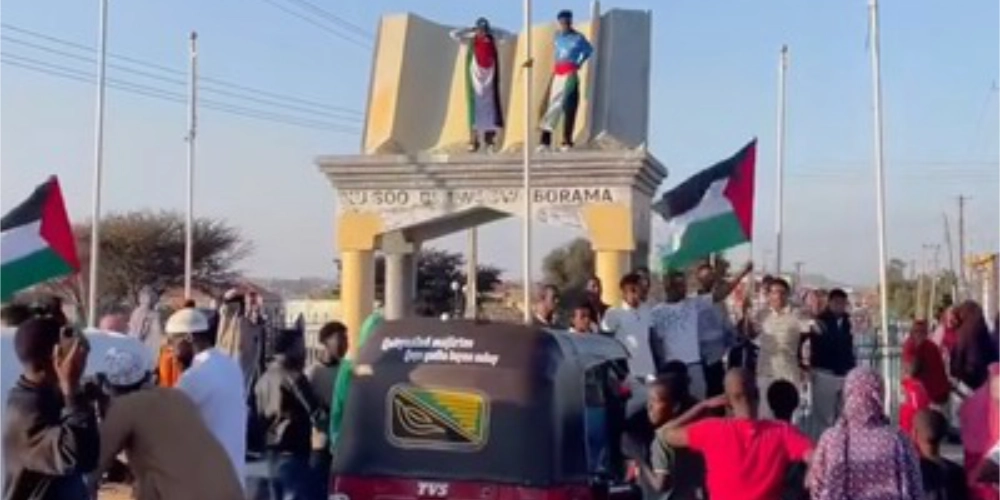
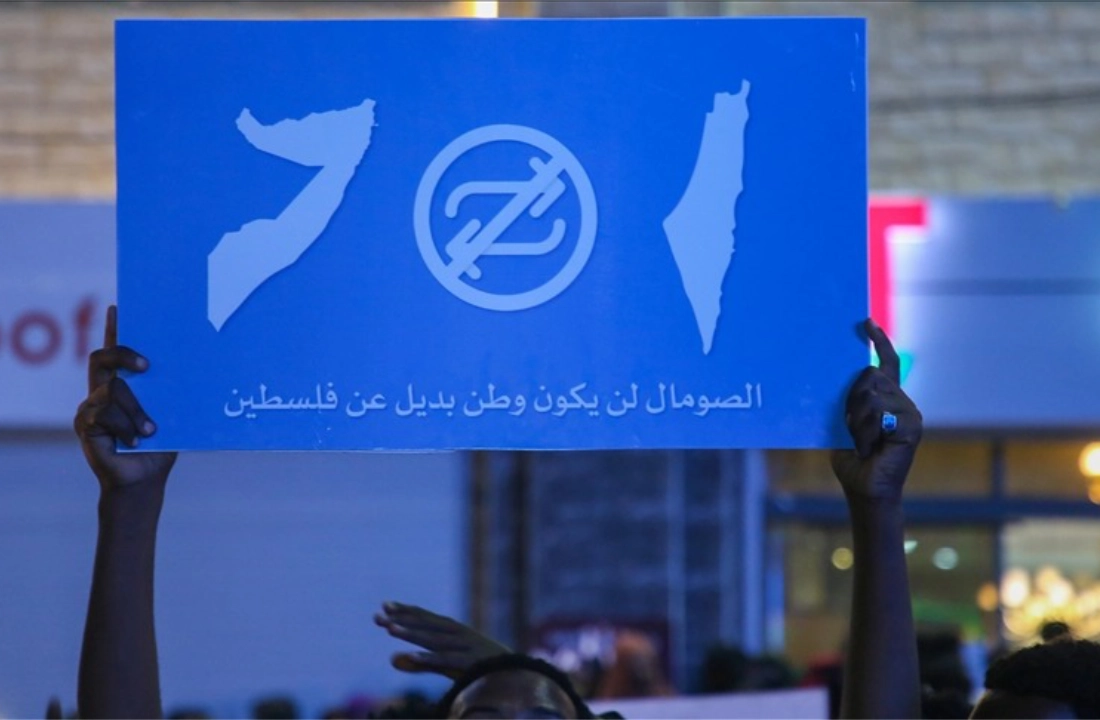
Borama protests: Demonstrators reject reports of Israeli recognition of Somaliland, calling for unity and union—not separation.
Three plausible short to medium-term scenarios emerge from the current risk landscape.
Across all scenarios, early warning signals to monitor include shifts in federal-state relations, changes in regional diplomatic engagement, and evolving extremist narratives. Together, these indicators determine whether recognition remains symbolic or evolves into a substantive driver of conflict escalation.
1. Priority on Federal Dialogue and Political Dispute Resolution: The Federal Government should prioritize restoring inclusive dialogue with Somaliland, focusing on the political and administrative issues contested by both parties. Re-establishing structured negotiation frameworks, involving neutral mediators, former facilitators and international partners, can provide a platform to address grievances and explore potential avenues for political accommodation. Shared security arrangements and conflict-resolution mechanisms can help prevent localised unrest. Inclusion of community leaders and traditional elders ensures that the concerns of both sides are heard, reducing opportunities for extremist groups to exploit political tensions.
2. Manage member-state relations effectively: Puntland and Jubaland require tailored approaches to reconcile political differences with the federal government. Regular coordination meetings and rapid-response political task forces can mitigate misunderstandings, prevent stalemates and strengthen central authority while respecting regional autonomy.
3. Prioritisation of Core Security Responsibilities: Strengthening federal security capacity is essential. The FGS must prioritise safeguarding Mogadishu and stabilising south and central Somalia, where Al-Shabaab poses the most immediate threat. A government unable to secure its de facto core areas cannot credibly manage northern disputes.
4. Strategic Focus and Civilian Protection: The federal government should avoid premature diversion of attention to northern conflicts and refrain from measures that harm civilians or economic life, such as collective restrictions imposed during past intergovernmental crises.
5. Enhance regional and AU-level engagement: Somalia should actively engage the African Union and neighbouring states to reinforce norms on sovereignty and territorial integrity. Simultaneously, Gulf actors' conflicting interests should be managed through targeted diplomacy to prevent external influence from exacerbating internal tensions.
Israel's recognition of Somaliland marks a significant rupture in the Hom of Africa's geopolitical balance, directly undermining the prevailing international consensus on Somalia's territorial integrity. The move accelerates centrifugal pressures within the federal system, encouraging Federal Member States such as Puntland and Jubaland to further loosen their alignment with Mogadishu. This trajectory raises the risk of Somalia drifting toward a de facto confederal arrangement, while contested regions like North Eastern Administration remain exposed as potential flashpoints for externally influenced instability.
Regionally, the recognition sharpens asymmetric maritime competition, complicating Ethiopia's port-access calculus and reinforcing the UAE's strategic maritime posture. At the domestic level, Al-Shabaab is already exploiting the episode to amplify narratives of state failure and federal weakness. Preventing institutional erosion will require the Somali Federal Government to move beyond reactive confrontation and prioritize internal political consolidation through a durable, negotiated federal settlement capable of withstanding an increasingly competitive external environment.
Horn Report’s mission is to shape regional narratives and deliver strategic insight that empowers decision-makers to navigate the Horn of Africa’s complexities within an evolving global landscape.