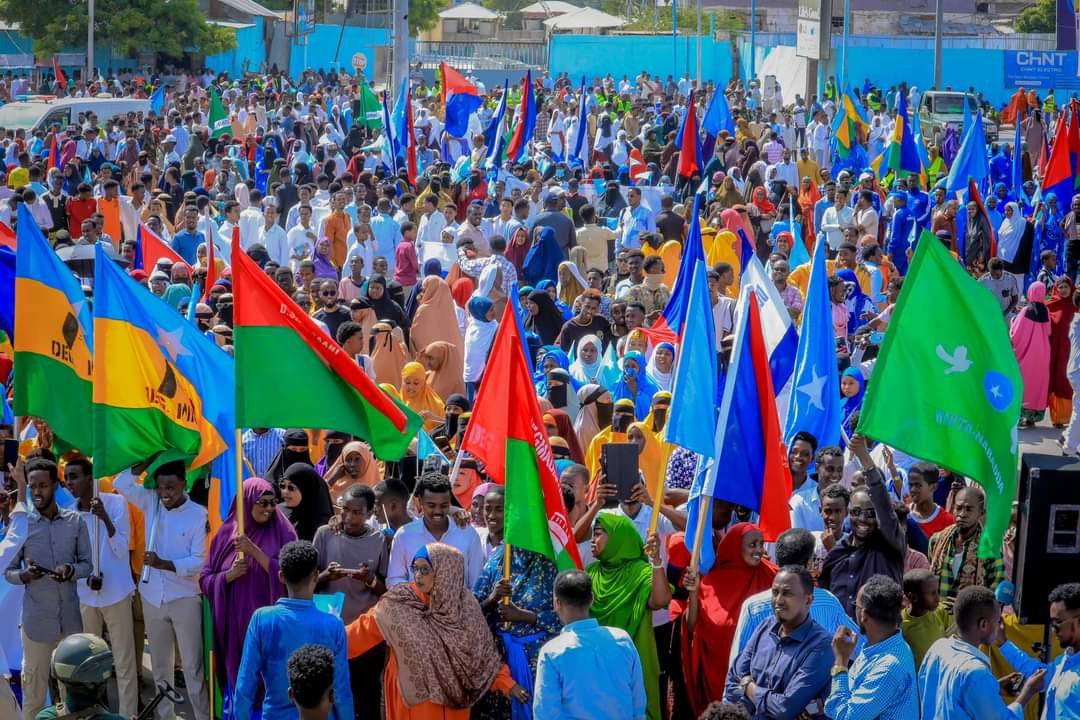
On 25 December 2025, Mogadishu is scheduled to witness an event of profound historical and political significance. For the first time since 1967, residents of Somalia's capital are expected to elect their district council representatives through a direct one-person, one-vote (OPV) system. If realised, this moment would mark both a symbolic and practical departure from over five decades of military rule, civil war, and elite-mediated political settlements.
The reintroduction of universal suffrage in Mogadishu is not merely a local administrative exercise. It represents a critical test case for Somalia's long-stated ambition to transition from indirect, clan-based electoral arrangements towards a participatory democratic order. The success or failure of this experiment will likely shape the trajectory of Somalia's national elections planned for 2026, influence relations between the federal government and member states, and affect international confidence in Somalia's state-building project.
This article examines whether Mogadishu's district elections can realistically serve as Somalia's OPV test case. It analyses the historical roots of electoral crises, the legal and institutional foundations of the current reform process, the political and security challenges facing implementation, and the broader implications for federalism and political legitimacy in Somalia.
Somalia's brief democratic interlude between 1960 and 1969 remains a reference point in the country's political memory. During this period, competitive multiparty elections were held, culminating in the 1967 transfer of presidential power through a parliamentary vote following general elections. Despite its flaws, this era established the principle of popular participation as a legitimate basis of governance.
This experiment ended abruptly with the 1969 military coup led by Mohamed Siad Barre. Over the next two decades, electoral politics were replaced by military rule, followed by state collapse in 1991. When political reconstruction began in the early 2000s, Somalia adopted indirect electoral mechanisms as a pragmatic response to insecurity, fragmentation, and the absence of national institutions.
Since 2000, all Somali governments have been formed through elite-driven processes, most notably the 4.5 clan power-sharing formula. Clan elders and delegates select members of parliament, who in turn elect the president. While this model succeeded in producing successive governments and preventing large-scale political violence, it entrenched elite capture, weakened accountability, and alienated large segments of the population from political participation.
Repeated commitments to restore one-person, one-vote elections were made during the transitional governments, the post-2012 federal era, and successive National Development Plans. Yet each electoral cycle resulted in negotiated compromises that preserved indirect selection. Mogadishu's 2025 district elections therefore represent not a natural progression, but a deliberate rupture with a deeply entrenched political equilibrium.
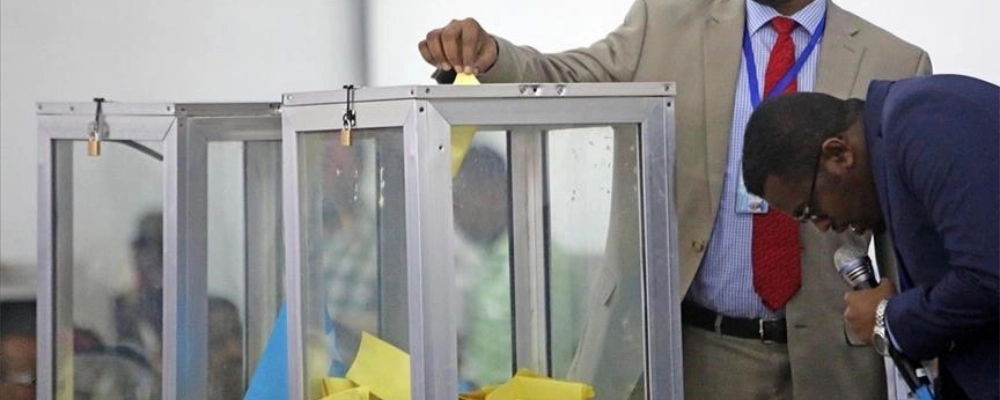
The current push towards universal suffrage is anchored in a series of legal and constitutional developments between 2023 and 2025. In March 2024, Somalia's Federal Parliament approved constitutional amendments that altered the method of electing the president, signalling an intention to reintroduce direct or semi-direct electoral mechanisms.
Later in 2024, Parliament passed a package of electoral laws following agreements reached by the National Consultative Council (NCC), comprising federal and some federal member state leaders. These laws established a unified National Independent Electoral and Boundaries Commission (NIEBC), consolidated electoral management structures, and outlined a roadmap towards OPV elections, beginning at the local level.
The legal framework scheduled local council elections in Mogadishu and other areas for 2025, followed by parliamentary elections later in the year and presidential elections thereafter. In August 2024, the federal cabinet formally endorsed a bill committing Somalia to universal suffrage, framing it as a return to constitutional normalcy after decades of exception.
However, the legal architecture remains contested. Some federal member states, particularly Puntland and Jubaland, objected to both the constitutional amendments and the electoral laws, arguing that they were adopted without sufficient consensus and risked centralising power in Mogadishu. These objections foreshadow the political disputes that continue to shadow the electoral process.
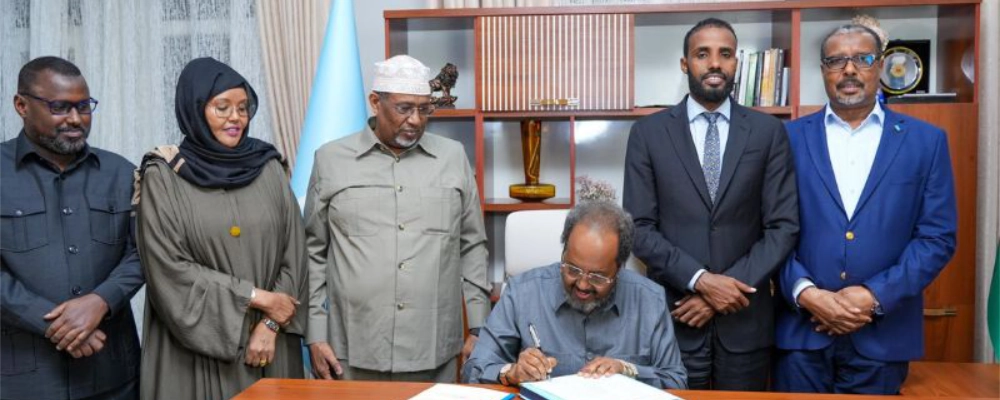
Mogadishu occupies a unique position in Somalia's political geography. As the capital, it is administered separately from the federal member states and governed as the Banadir Regional Administration. This status allows the federal government greater latitude to pilot electoral reforms without immediate negotiation with state authorities.
The decision to begin OPV elections in Mogadishu reflects both strategic calculation and political symbolism. Administratively, the city has comparatively better security coverage, infrastructure, and population density than most regions.
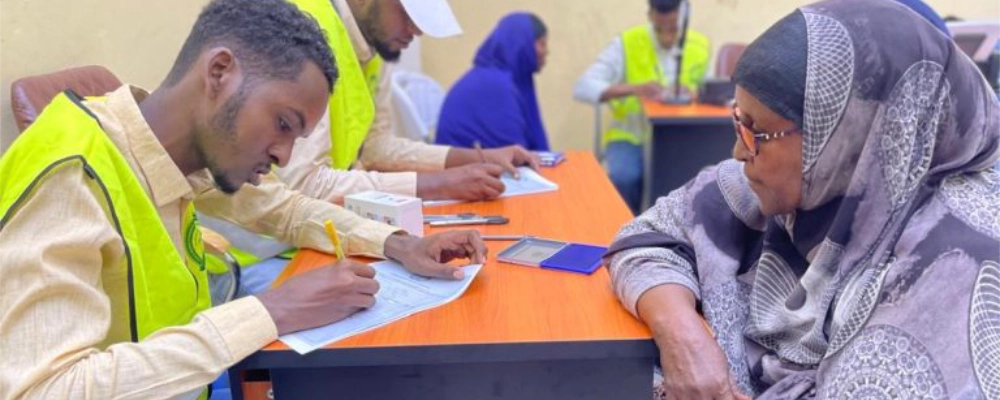
Politically, success in the capital would provide momentum and legitimacy for extending universal suffrage nationally. In April 2025, the NIEBC launched Somalia's first biometric voter registration campaign in Mogadishu in nearly six decades.
Dozens of registration centres were established across the city's districts, supported by mobile teams to reach underserved areas. Early figures suggested strong public engagement, with nearly one million registered voters, including significant participation by women.
The registration drive served not only as a technical exercise but also as a political signal. For many residents, it was the first tangible indication that citizenship might translate into political voice. Yet registration alone does not guarantee a credible election, particularly in a city where security threats and political manipulation remain persistent risks.
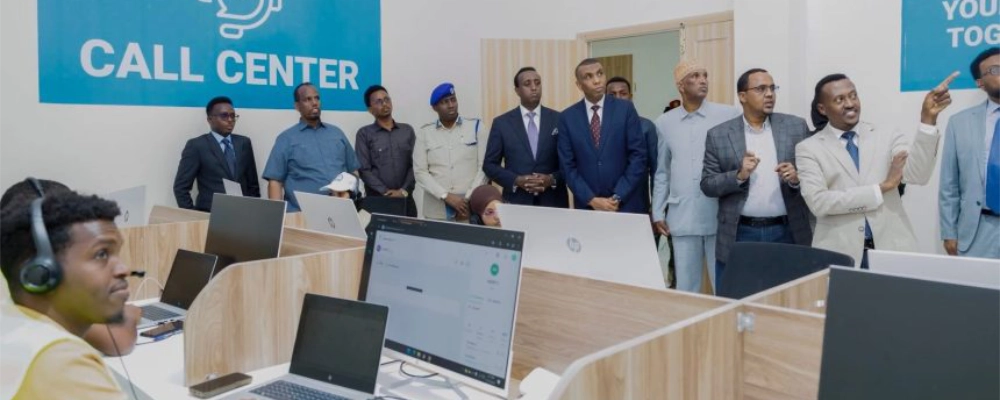
The credibility of Mogadishu's elections hinges largely on the capacity and perceived neutrality of the National Independent Electoral and Boundaries Commission (NIEBC). Reconstituted in late 2024, the commission absorbed responsibilities previously divided between separate electoral and boundary bodies. Its mandate includes voter registration, constituency delimitation, polling administration, and result certification.
While the commission has demonstrated organisational momentum, it faces significant constraints. Somalia lacks a comprehensive national civil registry or a universally accepted identity system, complicating voter verification. Logistical challenges, including funding, training of polling staff, and the secure transportation of materials, also remain unresolved.
Moreover, the NIEBC operates in a politically charged environment. Allegations of federal interference, selective enforcement of regulations, and favouritism towards pro-government actors persist. For OPV elections to gain legitimacy, the commission must not only function effectively but also be perceived as independent by opposition groups and the wider public.
International partners, including the United Nations and donor states, have provided technical and financial support. However, external assistance cannot substitute for domestic political buy-in. Electoral institutions in fragile states derive legitimacy primarily from consensus rather than procedural perfection.
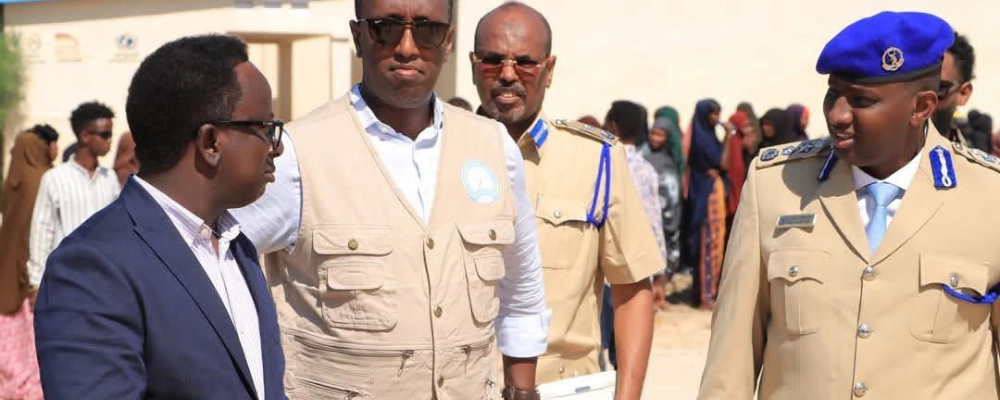
Security remains the most immediate threat to Mogadishu's electoral experiment. Despite gains made by Somali security forces and their allies, al-Shabaab continues to conduct targeted attacks in the capital, including bombings near government buildings and the intimidation of civilians.
Elections present high-value targets. Polling stations, electoral staff, candidates, and voters may be exposed to violence intended to disrupt the process or delegitimise outcomes. The federal government has pledged to deploy security forces and restrict movement within the city to protect polling sites, but the effectiveness of these measures remains uncertain.
Beyond physical security, electoral integrity faces subtler threats. Vote-buying, clan pressure, manipulation of voter rolls, and the misuse of state resources are persistent risks in Somalia's political culture. The shift to OPV does not automatically dismantle patronage networks; it merely changes the arena in which they operate.
While public enthusiasm for voting is evident, Somalia's political elite remains divided over the implications of universal suffrage. For many established actors, indirect elections offer predictability and control. OPV introduces uncertainty, redistributes power, and potentially empowers urban youth and marginalised groups.
The August 2025 political agreement between the federal government and sections of the opposition illustrates this tension. By reaffirming parliamentary elections by popular vote while retaining indirect presidential selection, the compromise reflects elite anxiety about fully surrendering control to the electorate.
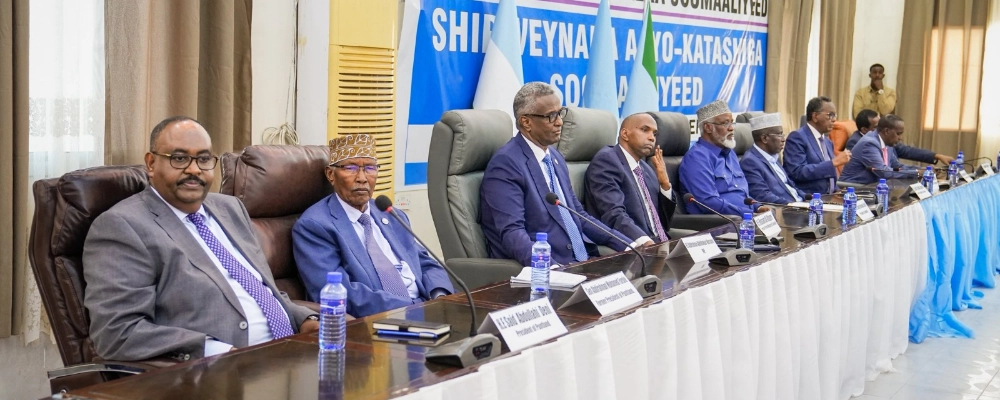
Opposition figures outside the agreement have criticised the electoral timeline as unrealistic and warned that rushed implementation could exacerbate instability. Federal member state leaders and Mogadishu-based opposition groups, including the Somali Future Council, have questioned the legitimacy of Mogadishu-led reforms in the absence of a comprehensive national consensus.
At the conclusion of the Somali Future Council's two-day conference in Kismayo, held between 18 and 20 December, participants issued an ultimatum granting President Hassan a one-month period, until 20 January 2026, to convene an inclusive electoral consultation with stakeholders. Failing this, they warned that parallel elections would be organised to prevent a constitutional vacuum.
These disputes underscore a central paradox: Somalia's democratic transition depends on elites willing to accept electoral risk, yet those same elites benefit most from the existing system.
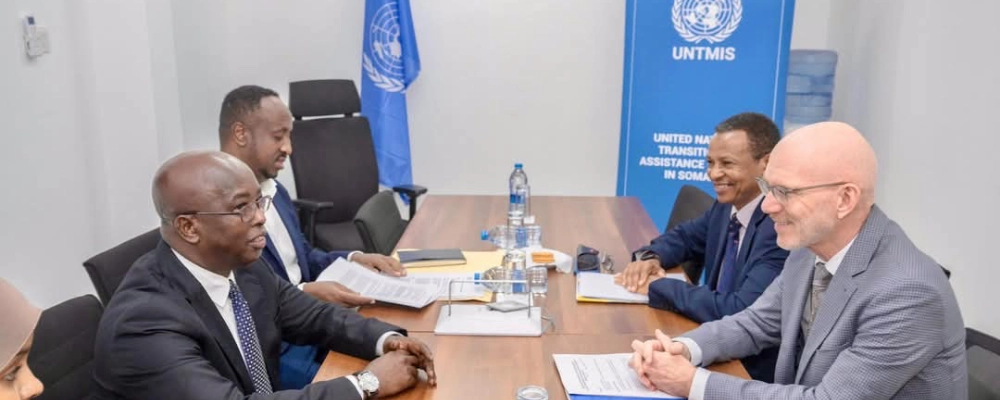
International actors have cautiously welcomed Somalia's electoral roadmap. The African Union and IGAD publicly endorsed the August 2025 political agreement, emphasising stability and dialogue. The United Nations has aligned its transition planning with Somalia's stated democratic objectives.
However, external support is conditional. Donors prioritise credible processes, inclusivity, and risk mitigation. A failed electoral experiment in Mogadishu could weaken international confidence, affect funding, and complicate Somalia's diplomatic engagements.
At the same time, excessive external pressure risks delegitimising domestic ownership. Somalia's electoral future cannot be engineered from outside, particularly in a political culture shaped by historical distrust of imposed solutions.
The outcome will serve as the ultimate litmus test for the nation’s state-building trajectory, determining whether Somalia is on a path towards democratic consolidation or a slide back into institutional paralysis. Below is an analysis of the high-stakes implications of the election
Mogadishu's planned one-person, one-vote elections represent a genuine, if fragile, opportunity to re-anchor Somali politics in popular legitimacy. They test whether decades of transitional governance can give way to meaningful citizen participation, whether institutions can function beyond elite bargains, and whether security challenges can be managed without abandoning democratic ambition.
Yet these elections should not be romanticised. They are not the culmination of Somalia's democratic journey, but an experiment conducted under imperfect conditions. Success will be measured not only by ballots cast, but by the acceptance of results, restraint by political actors, and the ability to learn from inevitable shortcomings.
Mogadishu's elections carry implications beyond the capital. If successful, they could establish a precedent for district-level governance across Somalia, strengthening decentralisation and local accountability. Local councils elected by residents could become meaningful actors in service delivery, urban planning, and conflict mediation. Conversely, a flawed or contested process could reinforce scepticism towards universal suffrage and provide justification for reverting to indirect arrangements elsewhere. Federal member states may resist adopting a model perceived as imposed or manipulated by the centre.
Whether Mogadishu becomes the birthplace of Somalia's democratic renewal or another cautionary tale will depend less on legal texts than on political will. Universal suffrage, after all, is not merely a technical system; it is a collective agreement to accept uncertainty in exchange for legitimacy. Mogadishu's elections function not only as a democratic test, but also as a negotiation over federal power, constitutional authority, and the meaning of representation in Somalia's post-conflict order. Somalia now stands at the threshold of that choice.
Horn Report’s mission is to shape regional narratives and deliver strategic insight that empowers decision-makers to navigate the Horn of Africa’s complexities within an evolving global landscape.