
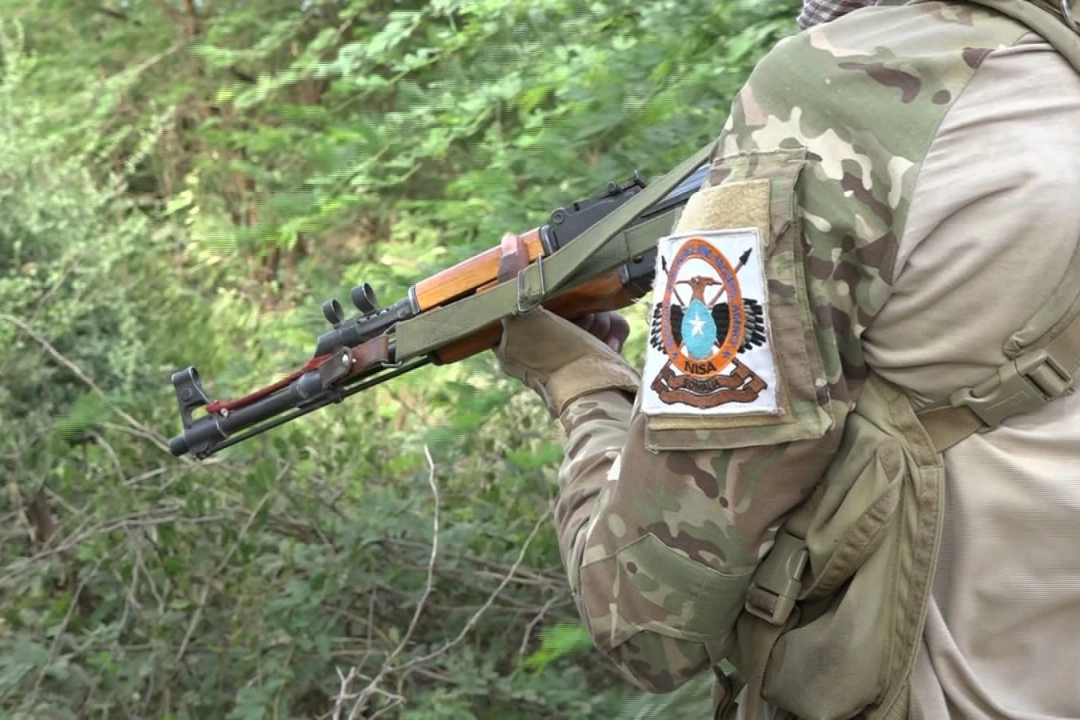
The National Intelligence and Security Agency (NISA) occupies a paradoxical position within Somalia’s post-conflict security architecture. Since its re-establishment in 2013, the intelligence apparatus has been shaped by sustained international engagement, particularly in the context of counter-terrorism cooperation against al-Shabaab, widely recognised as one of the most resilient jihadist organisations in Africa (Council on Foreign Relations, Al-Shabab backgrounder,). While external assistance has been indispensable in enabling NISA to operate, it has also embedded the agency within a dense web of foreign security relationships that continue to shape its priorities and institutional behaviour.
Unlike intelligence services that develop incrementally within relatively consolidated political systems, NISA has emerged under conditions of protracted conflict, fragmented authority and what has been described as the „extraversion” of Somali security institutions (Mohamed Haji Ingiriis, African Security Review,). External actors have not merely supported Somali intelligence, but they have become integral to how intelligence is defined, prioritised and operationalised in the Somali context. As a result, NISA’s evolution cannot be understood through a purely domestic lens. It is best seen as a hybrid institution shaped by the interaction of Somali political dynamics and external security agendas.
This piece examines how foreign intelligence partnerships have influenced NISA’s development, with particular attention to the risks of strategic dependency and institutional distortion. It argues that while external assistance has been indispensable in enhancing certain operational capabilities, it has also constrained NISA’s ability to develop an autonomous intelligence culture rooted in Somali political and social realities. The analysis is organised around three core themes: (1) the architecture of foreign intelligence involvement and competition, (2) the capacity–distortion trade-offs produced by external training and funding and (3) the structural tension between counter-terrorism cooperation and intelligence sovereignty. The manuscript concludes with practical policy recommendations for Somali authorities and external stakeholders.
Foreign intelligence engagement in Somalia is neither unified nor hierarchical. Instead, it consists of overlapping bilateral and multilateral relationships, each shaped by distinct threat perceptions, political interests and regional ambitions. For NISA, this has produced an environment of constant negotiation, adaptation as well as institutional incoherence at times.
The United States has been the most consequential external intelligence actor. Its engagement has focused overwhelmingly on counter-terrorism, particularly the disruption of al-Shabaab’s leadership networks and operational cells. Through training, equipment provision and close operational coordination, U.S. support has enhanced the tactical capabilities of NISA, especially within specialiaed units tasked with high-risk operations (U.S. Congressional Research Service, Somalia,). However, this partnership has also reinforced a narrow conception of intelligence as a tool for kinetic action rather than as a comprehensive system for strategic assessment, political intelligence and long-term threat anticipation.
Türkiye’s involvement reflects a different strategic logic. Turkish intelligence and security assistance has been embedded within a broader framework of political, economic and infrastructural engagement. Training programs have emphasiaed discipline, hierarchy and organisational cohesion, often drawing on Turkish models of security governance. While this has contributed to professionaliaation in certain areas, it has also tended to strengthen executive-centric intelligence practices (East African Institute for Peace & Governance,). The emphasis on loyalty and centralised authority has sometimes come at the expense of internal checks, analytical independence and inter-agency coordination.
Gulf actors, particularly Qatar and the United Arab Emirates, have influenced Somalia’s intelligence landscape in more indirect and politically charged ways. Their engagement has often been tied to elite relationships and regional rivalries rather than formal capacity-building. Competition between Gulf states has periodically translated into shifts in funding, access and political backing for different factions within the Somali security sector. For NISA, this has reinforced patterns of politicisation and instability, as changes in political alignment at the executive level can rapidly reshape the external partnerships and internal power structures of the intelligence agency (Institute for Security Studies, East Africa Report,).
What distinguishes Somalia from many other recipient states is not simply the number of external intelligence actors involved, but the absence of a coherent framework to harmonise their engagement. Rather than complementing one another, external partnerships frequently operate in parallel, reinforcing and undermining each other. For an institution as fragile as NISA, managing these competing influences has proven extremely difficult.
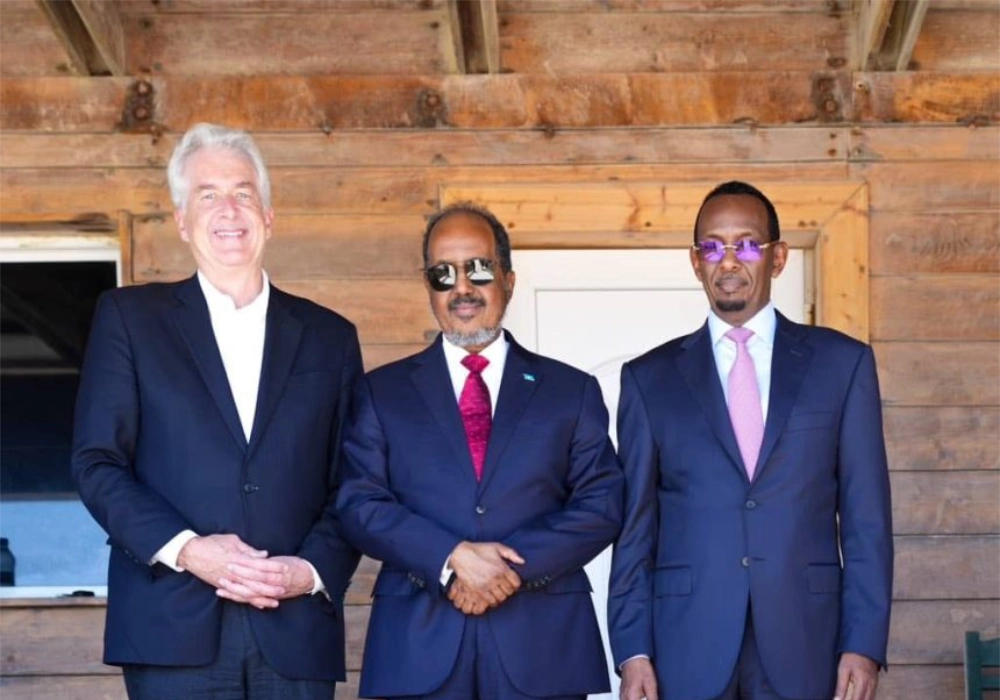
President Hassan Sheikh Mohamud meets CIA Director William J. Burns to advance Somalia–US strategic cooperation.
External intelligence assistance is typically justified in terms of capacity-building. Training programs, equipment transfers and financial support are presented as means of strengthening the effectiveness of the recipient agency. In practice, however, such assistance often reshapes institutional behavior in less visible ways.
In NISA’s case, externally supported capabilities have tended to cluster around specific operational functions, particularly counter-terrorism raids, targeted arrests and intelligence support to military operations. Units that receive sustained foreign backing often enjoy better resources, higher salaries and privileged access to decision-makers. While this can improve short-term performance, it also creates internal asymmetries that undermine institutional cohesion.
Over time, these asymmetries can lead to a form of strategic capture, in which parts of the intelligence service become more responsive to external partners than to domestic institutional priorities. Intelligence collection, analysis and reporting are shaped to meet donor expectations, sometimes at the expense of issues that are critical for Somali stability but less salient to foreign actors (Sinkó Gábor & Besenyő János, International Journal of Intelligence and CounterIntelligence). This dynamic is particularly evident in the relative neglect of counterintelligence, internal vetting and long-term analytical capacity, which are areas that are essential for institutional resilience, but offer limited immediate returns for external partners.
Funding dependency amplifies these effects. When operational budgets and salary structures are sustained through external support, intelligence agencies face strong incentives to demonstrate activity and alignment instead of investing in slower, less visible forms of capacity development. Intelligence becomes output-oriented, measured by arrests made or operations conducted, rather than by improvements in analytical depth, institutional learning or public trust.
These distortions are not merely technical. They intersect with Somalia’s domestic political economy, where intelligence institutions have long been entangled with elite competition and regime security. External assistance, when channeled through executive authority without robust safeguards, can inadvertently reinforce the use of intelligence for political intimidation, surveillance of rivals and control of dissent. In such contexts, the line between counter-terrorism and regime protection becomes increasingly blurred.
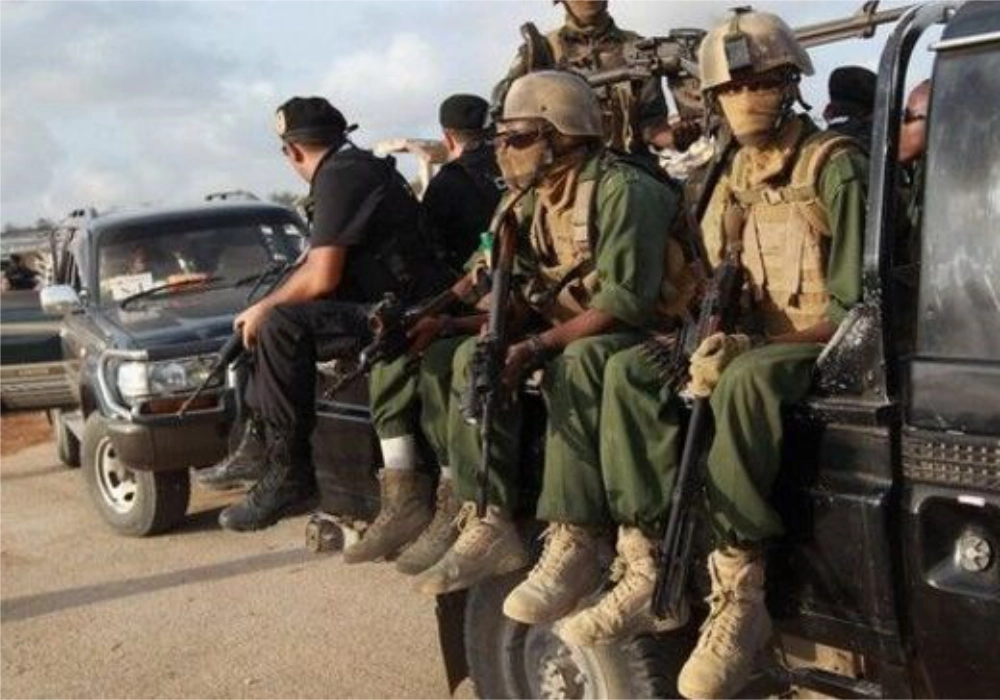
Joint operation conducted by NISA forces in coordination with international partners.
One of the most significant but least acknowledged consequences of externally driven intelligence assistance is its impact on local legitimacy. Effective intelligence in Somalia depends heavily on human sources, community trust and deep familiarity with clan and sub-clan dynamics. These forms of intelligence cannot be generated through technology or training alone, since they require sustained engagement with local populations. Research on policing and intelligence in Mogadishu has consistently highlighted the centrality of trust and predictability in generating actionable information (Alice Hills, Whitehall Papers,).
When NISA is perceived primarily as an externally backed force or as an instrument of elite politics, its ability to cultivate such relationships is severely constrained. Communities that view the intelligence agency with suspicion or fear are less likely to cooperate voluntarily, forcing NISA operatives to rely on coercive methods that further erode trust. This dynamic creates a vicious cycle, as declining legitimacy reduces intelligence quality, which in turn increases reliance on force and external support.
The contrast with al-Shabaab’s intelligence apparatus, the formidable Amniyat, is instructive if deeply uncomfortable. Despite its brutality, the terrorist group has invested heavily in local embeddedness, using a combination of coercion, predictability and social penetration to build an extensive intelligence network. Its effectiveness highlights a fundamental truth. Intelligence success in Somalia is less about technical sophistication than about organisational alignment with local realities.
External assistance that overlooks this dimension risks reinforcing a model of intelligence that is operationally active but socially detached. For NISA, rebuilding legitimacy is not simply a public relations challenge but a strategic necessity. Yet legitimacy cannot be imported or imposed. It must be cultivated through consistent behavior, accountability and a clear distinction between intelligence work and political repression.
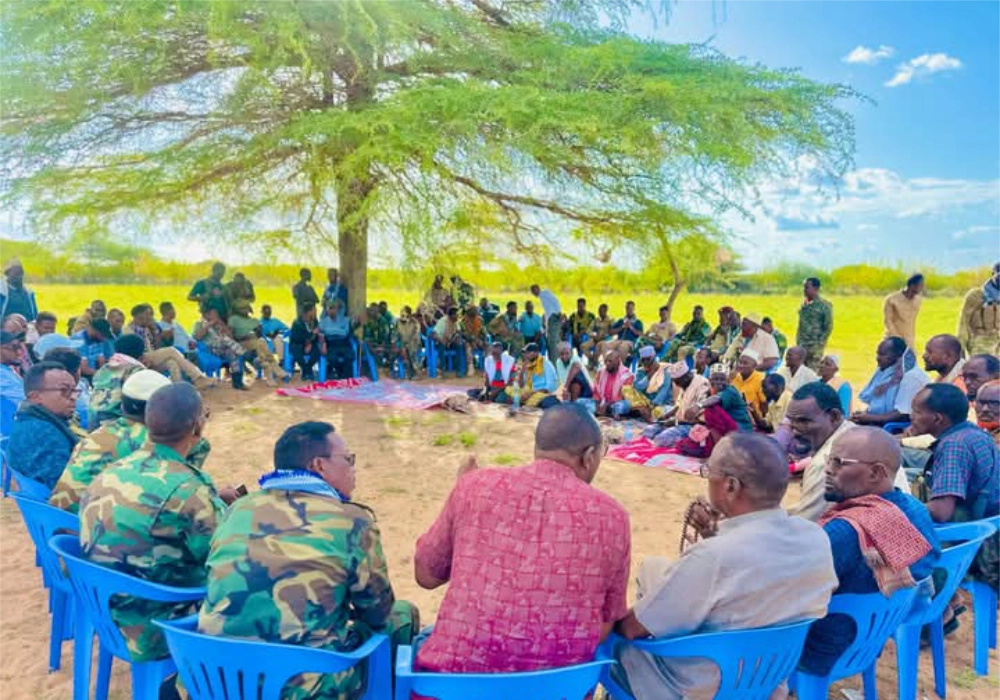
NISA Director meets SNA local forces and community leaders in Moqokori District to discuss security coordination.
The concept of intelligence sovereignty is often treated as an abstract ideal, but in practice it is defined by concrete mechanisms, answering questions, such as who sets priorities, who controls information flows and who bears responsibility for decisions? In Somalia, these are heavily influenced by external actors.
Counter-terrorism cooperation has provided NISA with access to resources and expertise that would otherwise be unavailable. At the same time, it has constrained the apparatus’s strategic autonomy. Intelligence priorities are frequently shaped through informal negotiations between Somali executive authorities and foreign partners, with limited institutional mediation (World Bank & UNSOM, Security and Justice Sector PER,). This weakens NISA’s ability to articulate and defend a coherent national intelligence agenda.
There is also a temporal dimension to this problem. External partners tend to prioritise immediate threat reduction, while intelligence sovereignty requires long-term investment in institutional capacity. These time horizons do not always align. As a result, NISA is often pulled toward short-term operational tasks at the expense of strategic development.
The sovereignty dilemma is further complicated by the federal structure in Somalia. Intelligence authority is contested not only between domestic and external actors, but also between the federal government and regional administrations. External intelligence engagement, when focused exclusively on federal institutions, can exacerbate these tensions, undermining efforts to build a unified security architecture.
Ultimately, the question is not whether Somalia can or should disengage from foreign intelligence cooperation. Given the scale of the threat environment, disengagement is neither realistic nor desirable. The more relevant question is whether such cooperation can be structured in ways that strengthen, instead of substituting for, domestic intelligence capacity.
For Somali policymakers, the central challenge is to reassert institutional control over intelligence priorities without alienating critical external partners. This requires a clearer articulation of national intelligence objectives, supported by mechanisms for internal coordination and minimal albeit credible oversight. Without such frameworks, external assistance will continue to shape NISA by default (Sinkó Gábor & Besenyő János, South African Journal of International Affairs,).
For external actors, Somalia offers a cautionary lesson in the unintended consequences of security assistance. Intelligence partnerships that prioritise tactical success over institutional development risk perpetuating dependency and fragility. More critically, they may undermine the very legitimacy that effective intelligence requires.
For regional stakeholders, the Somali case illustrates the destabilising effects of intelligence competition in fragile states. Proxy dynamics within the intelligence sector do not remain confined to elite politics. They shape operational behavior and influence conflict dynamics on the ground.
NISA’s trajectory illustrates the structural contradictions inherent in intelligence-building within fragile states that are deeply embedded in external security architectures. Foreign assistance has been indispensable in enabling the agency to function at all, particularly in the realm of counter-terrorism operations and high-risk security tasks. At the same time, this assistance has constrained the strategic autonomy of the intelligence apparatus by shaping priorities, incentives and institutional behavior in ways that are not always aligned with long-term security needs in Somalia. Capacity has been enhanced unevenly, producing pockets of operational effectiveness alongside persistent weaknesses in analytical depth, internal cohesion and institutional accountability.
Moving beyond this condition requires a recalibration rather than a rupture in external engagement. The challenge is not to reduce cooperation, but to redefine its purpose. Intelligence assistance that prioritises sustainability, internal governance and strategic capacity is more likely to strengthen sovereignty than support focused narrowly on operational performance. This implies greater attention to institutional continuity, counterintelligence resilience and the cultivation of local legitimacy.
Absent such a shift, Somalia risks entrenching an intelligence architecture that performs effectively in moments of crisis, but remains brittle under sustained pressure. In a security environment characterised by protracted conflict and political uncertainty, durability matters as much as immediacy. An intelligence service that cannot outgrow dependency will struggle not only to counter threats, but to anchor the broader project of state consolidation.
These outcomes should not be interpreted as evidence of deliberate external manipulation or bad faith. Rather, they reflect a convergence of misaligned time horizons and assumptions. External partners, driven by immediate threat perceptions and political accountability at home, tend to privilege measurable operational outputs over slower, less visible processes of institutional maturation. Somali authorities, operating within a fragmented political landscape, have often adapted to these incentives in pragmatic ways, even when doing so has reinforced dependency or politicisation (Mohamed Haji Ingiriis, African Affairs,). The result has been an intelligence institution that remains highly active yet structurally constrained, responsive to external demands but less capable of defining and defending a coherent national intelligence agenda.
Moving beyond this condition requires a recalibration rather than a rupture in external engagement. The challenge is not to reduce cooperation, but to redefine its purpose. Intelligence assistance that prioritises sustainability, internal governance and strategic capacity is more likely to strengthen sovereignty than support focused narrowly on operational performance. This implies greater attention to institutional continuity, counterintelligence resilience and the cultivation of local legitimacy.
Absent such a shift, Somalia risks entrenching an intelligence architecture that performs effectively in moments of crisis, but remains brittle under sustained pressure. In a security environment characterised by protracted conflict and political uncertainty, durability matters as much as immediacy. An intelligence service that cannot outgrow dependency will struggle not only to counter threats, but to anchor the broader project of state consolidation.
Horn Report’s mission is to shape regional narratives and deliver strategic insight that empowers decision-makers to navigate the Horn of Africa’s complexities within an evolving global landscape.