Women's participation in Somalia's security sector has gradually become an important component of ongoing state-building and security sector reform efforts. Historically, policing institutions in Somalia have been overwhelmingly male-dominated, reflecting broader structural challenges within public institutions following decades of conflict. In recent years, however, reform initiatives supported by the federal government and international partners have increasingly emphasised the integration of women into security institutions as part of broader professionalisation and institutional rebuilding processes.
Women's participation has become particularly pertinent within Somalia's current SSR agenda, where effectiveness, stabilisation, and community trust are key priorities. Policy frameworks increasingly recognise that the limited inclusion of women constrains the operational reach of policing institutions, particularly in community engagement and the handling of sensitive cases. Female police officers play a crucial role in addressing sexual and gender-based violence and supporting gender-responsive policing, thereby contributing to improved public confidence in law enforcement institutions UNDP joint police program phase 2
Despite growing policy commitments, women remain underrepresented within the Somali Police Force and continue to face institutional barriers related to recruitment, career progression, and access to leadership roles. This gap creates a critical tension between reform ambitions and operational realities. This article examines this tension by analysing key institutional constraints alongside emerging reform opportunities and assesses the implications of women's participation for Somalia's broader security architecture and governance reforms.
Women's participation in the Somali Police Force must be understood within the broader challenges facing Somalia's security governance and state-building processes. The persistent underrepresentation of women is not merely the result of social attitudes or individual limitations; it also reflects deeper institutional dynamics related to recruitment systems, human resource management, promotion practices, and political transition. These structural factors shape who enters policing, who advances within it, and whose perspectives are reflected in decision-making processes UN Women-Report.
In Somalia's current context-characterised by ongoing security sector reform, the gradual assumption of national security responsibilities, and continued pressure to build public trust in state institutions-the composition of the police force has direct implications for effectiveness and legitimacy. Women officers play a vital role in community engagement, the handling of sensitive cases, and the provision of gender-responsive policing services. Their limited presence therefore constrains the operational reach of the Somali Police Force and weakens its ability to respond to civilian security needs, particularly in areas affected by displacement, conflict, and gender-based violence UNDP joint police program phase 2.
At the same time, national policy frameworks and international security mandates increasingly recognise women's participation as a strategic requirement for sustainable peace and security. Commitments under Somalia's National Transformation Plan and United Nations Security Council Resolution 2767 emphasise inclusion, accountability, and institutional responsiveness as core elements of security governance. Yet significant gaps remain between these policy ambitions and everyday institutional practice. Understanding how these gaps arise, and how they might be narrowed, is central to assessing both the challenges and opportunities for advancing women's participation within the Somali Police Force.
In response to these challenges, the Somali Police Force has increasingly incorporated human resource development and gender mainstreaming as core institutional priorities. This strategic focus aims to modernise recruitment systems and career progression to ensure they are more gender-sensitive. International partners, including the UN, EU, UK, and US, have been instrumental in this transition through technical assistance and funding-such as the UNDP Joint Police Programme, Phase 2, and EUCAP Somalia-explicitly integrating gender considerations to translate policy commitments into practical reform initiatives.
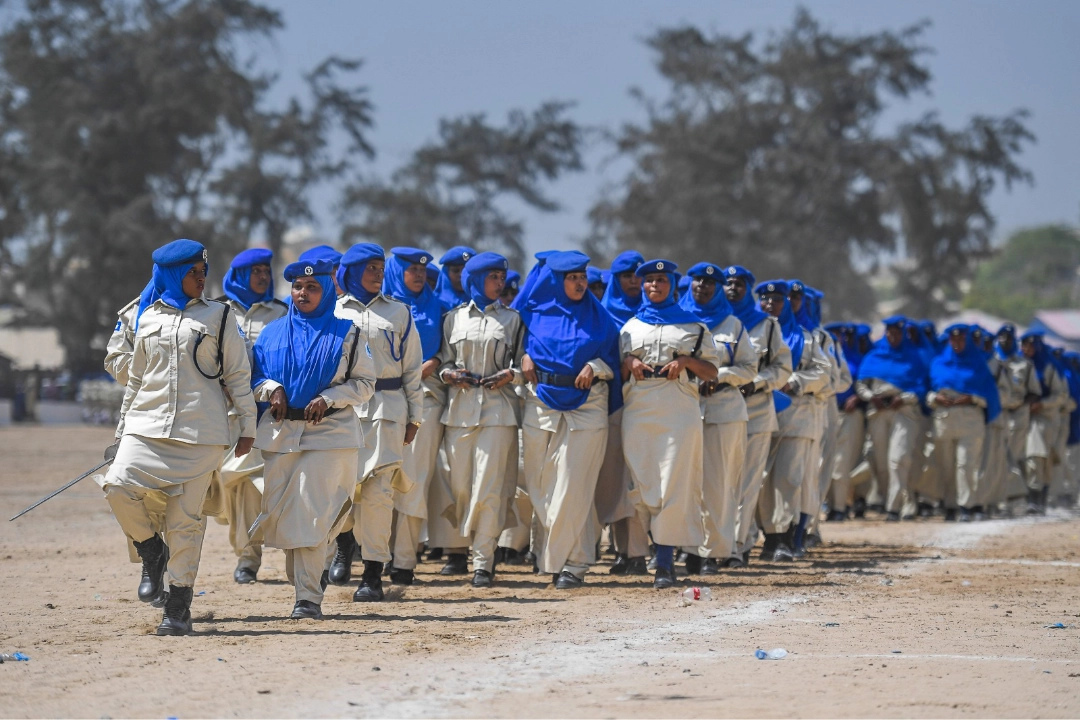
Female officers of the Somali Police Force stand on parade in Mogadishu ahead of a handover of Japanese-donated equipment via the UNPOS Trust Fund
Women's entry into the Somali Police Force remains constrained by weaknesses in recruitment systems and unequal access to institutional pipelines. According to analysis under the UNDP Joint Police Programme, Phase 2, recruitment processes continue to favour urban-based applicants with higher levels of formal education and access to information, thereby disadvantageous to women from rural and conflict-affected areas.
Local reports from 2023, including data shared through media outlets such as Radio Hiiraan, indicate that the average representation of women within the Somali Police Force is currently approximately 15%. While this figure reflects ongoing reform efforts, it highlights a persistent gap between national policy ambitions and the operational reality of recruitment. Literacy and education gaps significantly affect women's eligibility for entry into specialised units and technical policing roles, reinforcing their concentration in lower-skilled positions. In addition, recruitment and vetting procedures are often perceived as lacking transparency, creating uncertainty around selection criteria and reducing trust in merit-based advancement within the SPF.
Once recruited, women officers face workplace environments shaped by entrenched gender norms and institutional cultures. Evidence from the UN Women Report highlights a persistent gendered division of labour within security institutions, with women frequently assigned administrative or support roles rather than operational policing functions. This limits professional development and reinforces perceptions of policing as a male-dominated field. The report further documents harassment, safety concerns, and the absence of effective reporting mechanisms, all of which negatively affect retention and morale. These challenges are compounded by inadequate facilities-such as a lack of gender-sensitive accommodation, sanitation, and safe transport-particularly in insecure postings.
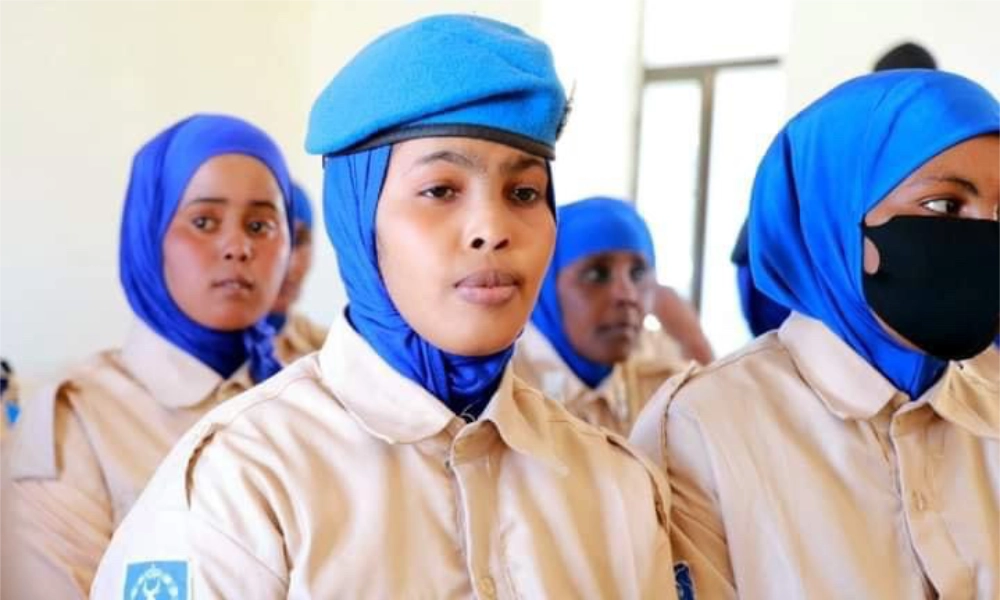
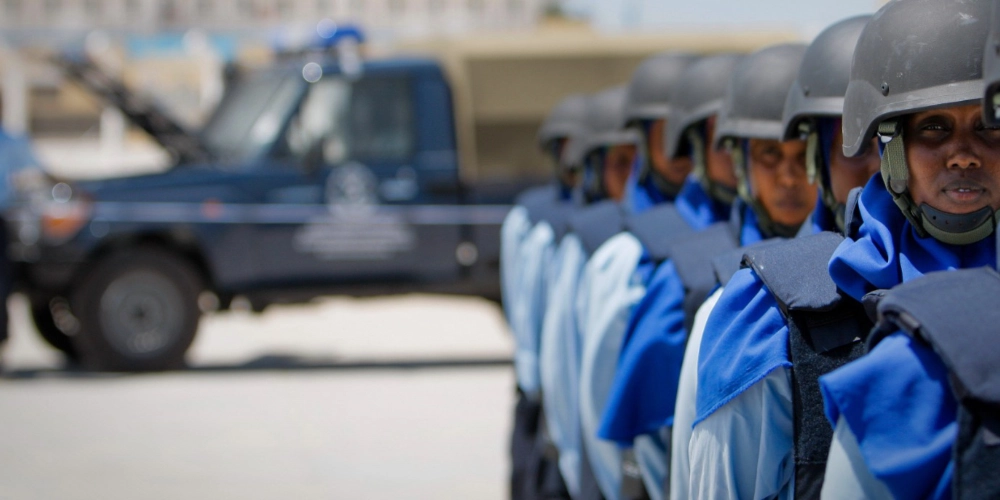
Female recruits join the Somali Police Force during a recruitment drive in Mogadishu, strengthening inclusive policing and security.
Women's advancement into leadership positions within the SPF remains extremely limited, reflecting broader governance and institutional constraints. UN Security Council Resolution 2753 underscores that women's participation in leadership and decision-making roles is essential for effective security governance, yet it remains insufficient across Somali security institutions. Promotion and leadership selection processes are frequently shaped by informal networks and clan-based influence, from which women are largely excluded.
While donor-supported initiatives have sought to expand access to training and leadership development, opportunities for advanced and international training remain uneven, limiting the sustainability of women's leadership pipelines within the SPF.
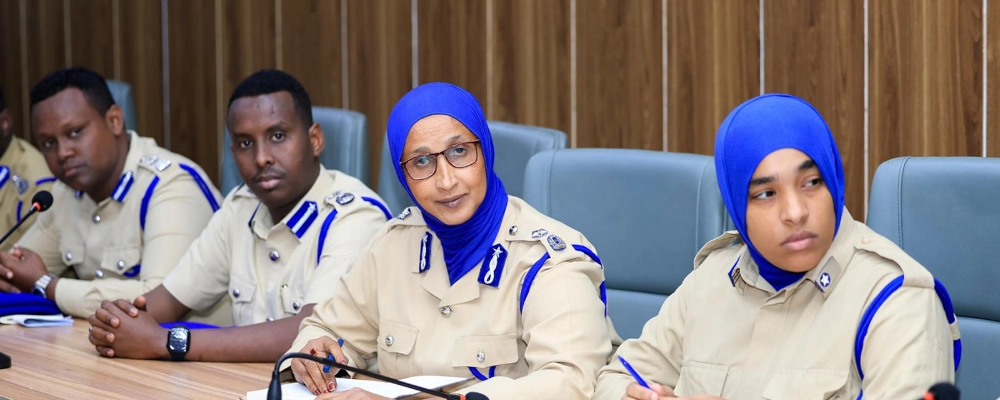
Female leadership in the Somali Police Force: Colonel Rahma Salaad Mohamed (second left) and Captain Samira Nazar
Despite persistent institutional barriers, Somalia's evolving policy and governance landscape presents emerging opportunities to strengthen women's participation within the Somali Police Force. These opportunities are primarily rooted in national reform frameworks, human resource modernisation efforts, and renewed political and donor emphasis on gender inclusion as a component of effective security governance.
While operational impacts remain uneven, the convergence of these factors signals a gradual institutional shift rather than isolated or symbolic reform. Recent national policy frameworks increasingly situate gender inclusion within broader state-building and governance objectives. Somalia's National Transformation Plan identifies gender equity and leadership as cross-cutting enablers of institutional effectiveness, emphasising gender-sensitive workplace policies, leadership development, and accountability mechanisms across public institutions, including the security sector. Within policing, this framing supports ongoing efforts to modernise human resource systems and integrate gender considerations into institutional planning.
The United Nations Security Council has consistently framed women's full, equal, meaningful, and safe participation as a strategic requirement for peace, security, and governance in Somalia. These resolutions link women's inclusion to institutional legitimacy, public trust, and the effectiveness of security institutions during political and security transitions. This normative guidance remains particularly relevant during the transition to the African Union Support and Stabilisation Mission in Somalia (AUSSOM), even as concrete impacts on gender inclusion within policing are yet to materialise United Nations Security Council Resolutions 2767.
Targeted capacity-building initiatives under the UNDP Joint Police Programme, Phase 2, have created entry points for expanding women's professional roles within the Somali Police Force. These initiatives focus on professionalisation, institutional development, and
gender-responsive policing, including training in community policing, investigations, and handling sensitive cases. While access remains uneven, such programmes demonstrate the potential for structured training pathways to support women's progression beyond administrative roles.
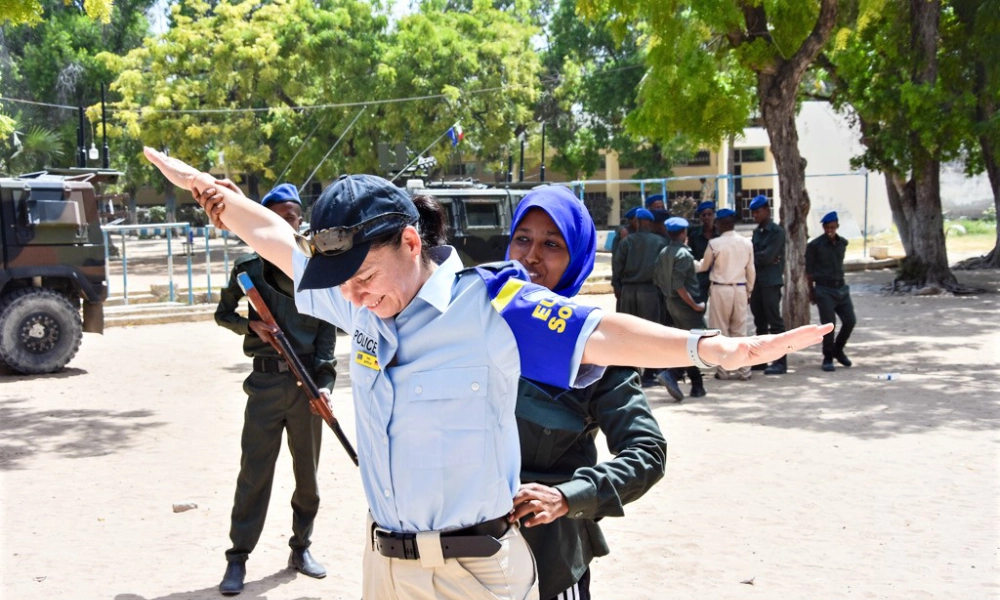
The Civilian Operations Commander for EU CSDP missions engages with EUCAP staff and Somali counterparts during a visit to Mogadishu
Donor engagement continues to reinforce gender inclusion as a governance and security priority. Support from international partners increasingly links assistance to institutional reform, accountability, and alignment with national frameworks such as the National Transformation Plan and Somalia's National Action Plan on Women, Peace, and Security.
Civil society organisations and women's networks further contribute by advocating for reform, monitoring implementation gaps, and supporting leadership development, thereby reinforcing the policy momentum for institutional change UN Women-Report.
The transition towards population-centric policing requires a force that is accessible to all citizens. According to the UNDP Joint Police Programme, Phase 2, increasing the representation of women in the SPF is essential for building public trust, particularly among women and children, who are often the most vulnerable in conflict-affected areas. Female officers facilitate higher reporting rates for sensitive crimes, such as gender-based violence, by providing a safer environment in which victims can seek justice.
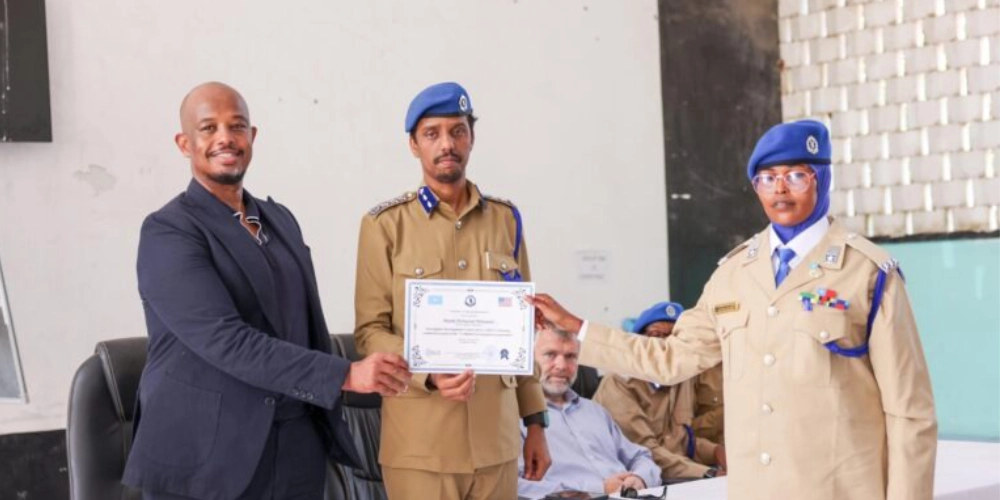
Somali Police Force graduates a new cadre of investigators, trained in modern investigative and forensic techniques, at a key ceremony in Mogadishu.
Women police officers contribute to CVE and stabilisation by strengthening preventive, community-based policing in fragile areas. Their presence improves access to local information, supports early warning mechanisms, and helps address civilian grievances that could otherwise be exploited by extremist actors. By reinforcing trust between communities and the state, women's participation enhances local stability and supports Somalia's broader transition from military-led security to civilian-centred governance.
For security institutions to be perceived as legitimate representatives of the state, they must reflect the demographic they serve. UN Security Council Resolution 2753 explicitly notes that the "full, equal, and meaningful participation of women" is integral to institutional legitimacy and the broader state-building process. This inclusivity strengthens the social contract between the Federal Government of Somalia and its citizens, moving the country closer to a stable, nationally owned security architecture.
The failure to institutionalise gender inclusion poses a strategic risk to the sustainability of the security transition. Without diverse representation, the SPF may remain unresponsive to the security needs of half the population, reinforcing public distrust. Furthermore, as outlined in the National Transformation Plan, the ultimate goal of the transition is self-sufficiency; stagnation in reform could lead to continued dependence on international actors for security and oversight, delaying the full realisation of national ownership.
To bridge the gap between policy commitments and operational realities, the Federal Government of Somalia and its partners should implement the following actionable measures:
The integration of women into the Somali Police Force is not merely a social aspiration but a strategic imperative for the success of Somalia's Security Sector Reform and broader governance agenda. As this report has examined, women's participation is fundamental to building institutional legitimacy, restoring public trust, and ensuring that policing is responsive to the needs of all citizens during this critical period of institutional rebuilding. While significant reform momentum is underway-driven by the National Transformation Plan and supported by international partners-the process remains uneven, hindered by persistent structural, cultural, and institutional barriers.
Achieving a truly inclusive security architecture requires a sustained, multi-dimensional commitment from both Somali authorities and the international community. It necessitates moving beyond ad-hoc training towards deep-seated institutional changes that protect and promote female officers. Ultimately, an inclusive Somali Police Force represents a cornerstone of long-term national stability. By leveraging the full talent and perspectives of its population, Somalia can build a self-sufficient security sector capable of maintaining the rule of law and fostering a peaceful, resilient state for future generations.
Horn Report’s mission is to shape regional narratives and deliver strategic insight that empowers decision-makers to navigate the Horn of Africa’s complexities within an evolving global landscape.